How to Identify Early Signs of Structural Movement
We often spot early structural movement through changing cracks, sticking doors or windows, uneven floors, and gaps around walls or trim. We should focus on progressive or grouped symptoms. Water issues, wall displacement, and movement near footings or attached structures can signal a more serious concern.
Key Takeaways
- We should assess cracks, binding doors, floor slope, and wall changes together. One isolated symptom rarely proves foundation damage.
- We can monitor stable hairline cracks and minor seasonal sticking. We should document any condition that widens, returns after repair, or affects several areas.
- We should arrange a prompt professional assessment for bowing or leaning walls, widening stair-step masonry cracks, major floor slope, visible displacement, or ongoing water intrusion.
- We should inspect drainage, grading, gutters, downspouts, roof runoff, erosion, and plumbing leaks. Repeated moisture changes can weaken supporting soil.
- We should select foundation support methods only after an assessment identifies the cause, load needs, soil conditions, and structural requirements.
Signs That Deserve Prompt Attention
A crack or sticking door does not automatically mean foundation failure. The pattern, location, severity, and whether the condition is changing are what matter.
We should assess signs of structural movement as a group of conditions, not as one isolated symptom. An online article can help us recognize foundation warning signs, but it cannot diagnose a structural issue.
Timely evaluation by a qualified structural or foundation professional is the right next step when multiple house movement symptoms appear, conditions worsen, or there is visible displacement. We should act promptly for bowing walls, widening stair-step masonry cracks, major floor slope, persistent water intrusion, sudden widespread door or window binding, or concerns related to a planned addition, deck, garage, or structural renovation.
Symptom Comparison
| Monitor | Address as Maintenance | Seek Timely Professional Evaluation |
|---|---|---|
| Hairline drywall crack that stays unchanged | Isolated trim gap or seasonal sticking door | Widening, recurring, or clustered cracks |
| Small cosmetic flaw with no nearby symptoms | Pooling water, clogged gutters, or downspouts draining near the home | Visible wall bowing, leaning, displacement, or separated masonry |
| Minor seasonal movement in one door or window | Grading that directs water toward the foundation | Major floor slope or sudden widespread sticking doors and windows |
| Stable old crack with no change over time | Minor surface cracking that does not progress | Cracks around footings, attached structures, or shifting retaining walls |
For a broader review of conditions that can require action, see these foundation repair warning signs.
Interior Changes That May Signal Structural Movement
Drywall and plaster cracks deserve attention when they recur after patching, widen, or develop near doors, windows, ceilings, and wall corners. We should note each crack’s location, direction, width, and whether nearby symptoms develop. Small cracks can result from normal material movement, but small foundation cracks that change over time need a closer look.
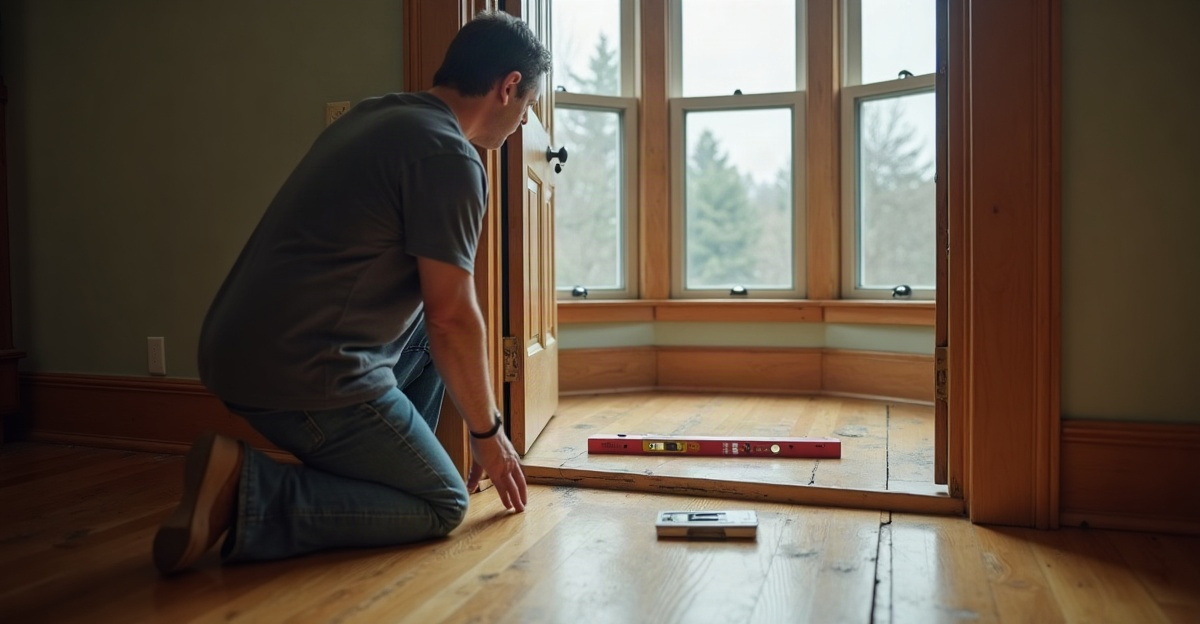
Sticking doors and windows can also be house movement symptoms. Seasonal humidity can cause temporary sticking without a structural concern. Sudden or persistent binding, doors that no longer latch, windows that separate from trim, or several affected openings at once warrant documentation and evaluation.
Uneven floors may feel sloped, sagging, soft, or bouncy. Gaps can also open between walls and ceilings, trim and floors, or cabinets and countertops. These conditions have several possible causes, including framing changes and support concerns. Our guide to common uneven floor causes explains why floor movement should be reviewed in context.
Shifting walls can appear bowed, leaning, cracked, or visibly displaced. A load-bearing wall is a wall that carries weight from the roof, floor, or structure above. Visible or progressing changes in these walls deserve timely professional attention.
Home age, framing methods, foundation type, local climate, past repairs, nearby construction, and normal material shrinkage all affect what an interior symptom may mean.
Exterior Foundation Warning Signs and Water Conditions to Check
Exterior foundation warning signs can include stair-step cracks in brick or block, cracks at corners, separated masonry, and retaining walls that appear to shift. Widening stair-step cracks or significant wall displacement should be evaluated instead of simply patched.
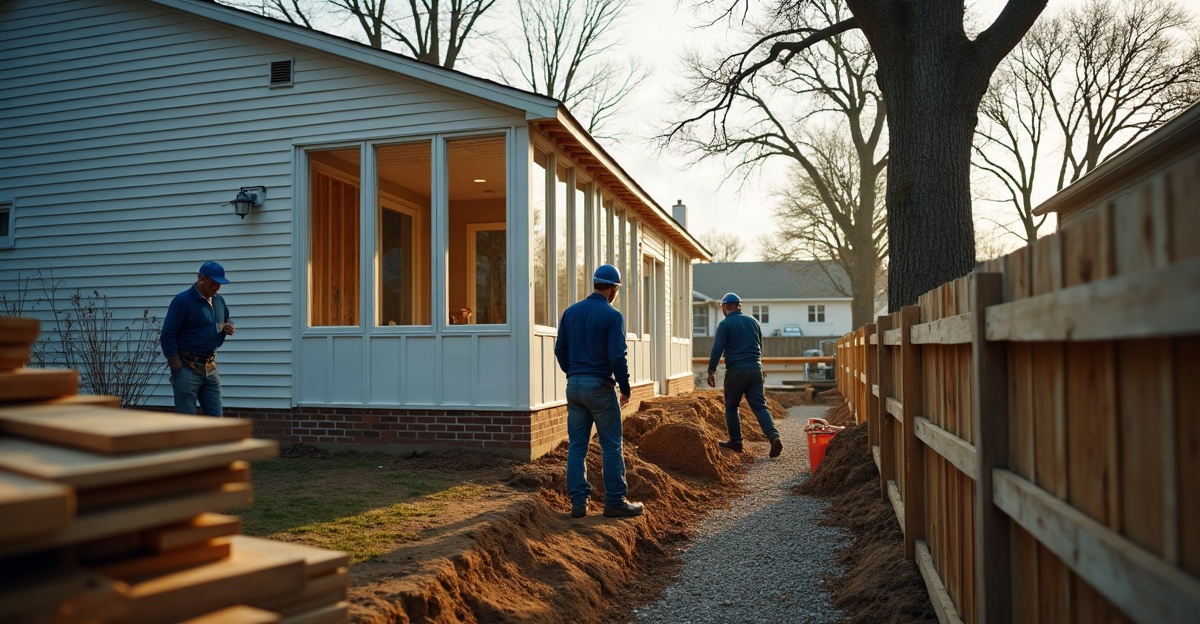
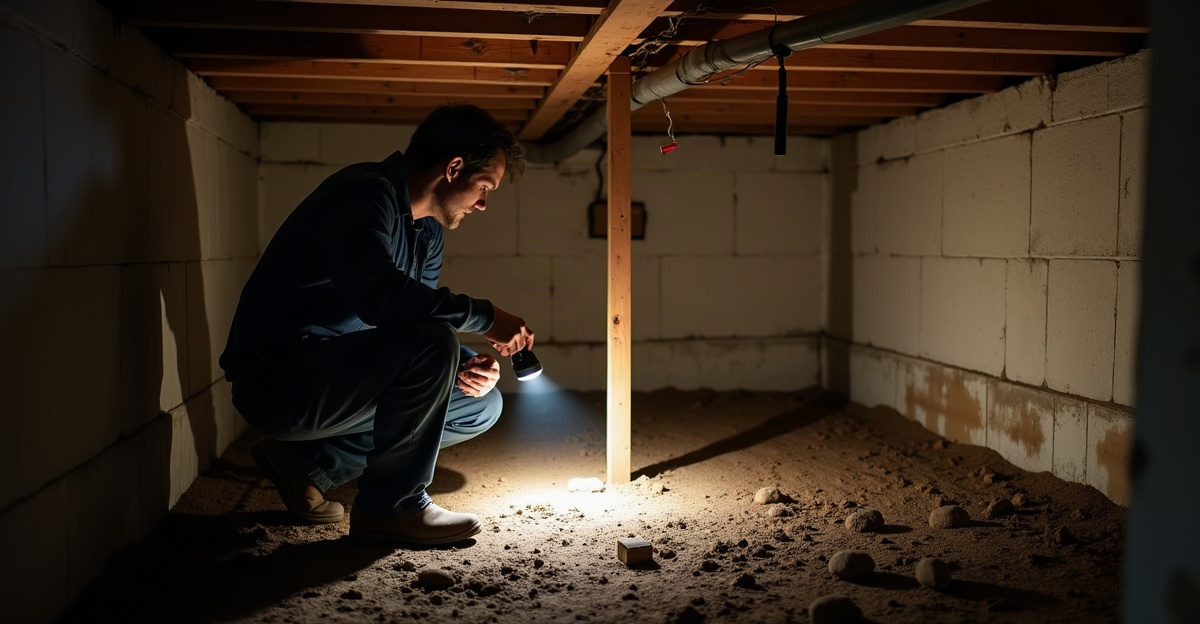
We should also inspect porches, decks, garages, additions, and other attached structures. These components can move differently than the main home because they may have separate supports, soil conditions, or loading. Movement around a footing or attached structure calls for more than a cosmetic repair. A footing is the widened base beneath a foundation or post that distributes structural load into the soil. Learn more about failing footing signs before starting a project or repair.
Water conditions deserve equal attention. Check for water intrusion, erosion, pooling near the foundation, roof runoff, downspouts discharging close to the house, poor drainage, improper grading, and signs of plumbing leaks. These conditions do not automatically confirm structural movement. Still, repeated saturation, runoff, and erosion can contribute to soil moisture changes and should be corrected.
What Movement Means and Why It Can Happen
Settlement is downward movement that can occur when soil or structural support beneath a building changes or compresses. Heave is upward movement, often associated with expanding soil or freezing conditions. Lateral movement is sideways pressure or displacement, such as a wall moving inward or outward.
Visible symptoms do not automatically prove settlement, expansive soil, or foundation failure. Material shrinkage, seasonal humidity, normal aging, framing movement, drainage issues, roof runoff, plumbing leaks, tree roots, inadequate footings, and nearby excavation can all contribute to visible changes.
In and around Bloomington, Minnesota, freeze-thaw cycles, changing moisture levels, snowmelt, drainage patterns, and site-specific soil conditions can influence movement. Homes in the area do not all face the same soil or foundation risks. The cause depends on the home’s age, framing, foundation type, soil, drainage, grading, climate, past repairs, and nearby construction. For more local context, review Minnesota foundation settlement causes.
How to Document and Monitor Changes Before They Get Worse
Persistent, progressive, or clustered symptoms deserve more attention than one stable cosmetic flaw. Hairline drywall cracks, minor material shrinkage, small cosmetic changes, and isolated seasonal door sticking may be appropriate to monitor if they remain stable.
What Homeowners Can Do Now
- Take dated, well-lit photos from the same angle.
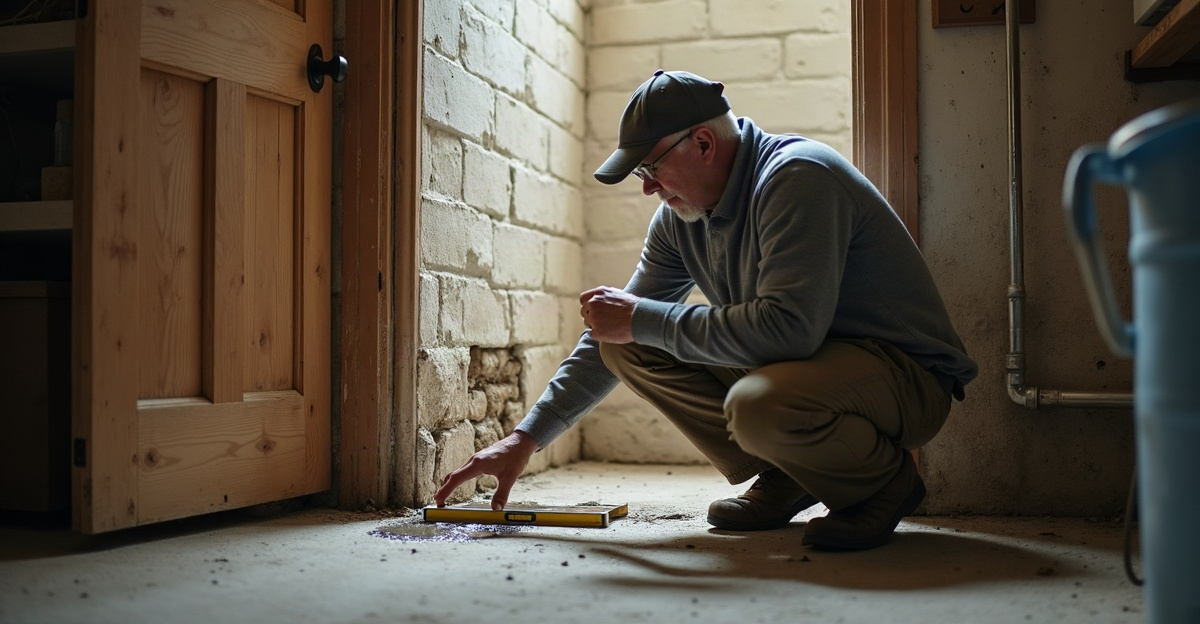
- Measure crack width where practical and record whether it changes.
- Note when doors, windows, or floors first began behaving differently.
- Check gutters, downspouts, grading, and areas where water pools near the structure.
- Record recent heavy rain, drought, plumbing leaks, excavation, nearby construction, or additions.
- Avoid cosmetic patching as the only response when cracks recur, widen, or appear with other house movement symptoms.
This structural movement checklist helps us answer how to tell if a crack is getting worse. A crack that reopens after repair, becomes wider, extends farther, or develops near new symptoms has changed from a simple monitoring concern into a condition worth evaluating. We should also remember that foundation problems can worsen when the cause remains unaddressed.
When Foundation Support and Helical Piers May Be Relevant
An assessment should come before selecting a repair method. Foundation support refers to systems that transfer or stabilize structural loads where existing support is insufficient. The right approach depends on the structure, load requirements, soil conditions, site access, foundation configuration, and the cause of movement.
Helical piers may be considered when a structure needs reliable load transfer to suitable bearing soil. They can be used for foundation support, settlement-related repairs, additions, decks, and garages. We provide helical pier installation after evaluating the project requirements and support needs.
Helical piers are not automatically the answer to every crack, sticking door, or instance of structural movement. They do not eliminate every cause of movement, and other repairs or conventional footings may be more appropriate in some situations. For planned projects, we can assess foundation support for additions, deck footing support, and garage foundation support.
If we see persistent cracks, shifting components, or footing concerns around a Bloomington-area home or project, TR Helical Piers can help us understand whether foundation support may be appropriate. Contact us through our foundation evaluation page to discuss the next practical step.