Signs Your Home Needs Foundation Repair And Stabilization

Recognizing early signs of foundation problems—such as widening cracks, uneven floors, sticking doors, and bowing basement walls—helps us determine when normal settling turns into structural movement. In Minnesota homes, freeze-thaw cycles, clay soil expansion, poor drainage, and poorly compacted fill often drive foundation shifting that calls for repair and stabilization.
Key Takeaways
- Horizontal cracks, widening diagonal or stair-step cracks, and bowing walls signal active foundation movement.
- Progression matters more than appearance; cracks or misalignment that worsen over time point to structural concerns.
- Uneven floors, recurring drywall cracks, and doors or windows moving out of square often reflect shifting support below.
- Minnesota’s frost depth, clay soils, and seasonal moisture swings commonly cause settlement and wall pressure.
- Effective stabilization corrects soil and support conditions instead of simply patching visible damage.
The Most Common Warning Signs of Foundation Movement
Foundation issues usually show up in ways we can see long before there’s serious structural damage. The key is recognizing which signs of foundation problems point to normal wear and which signal active movement.
Cracked foundation walls are often the first thing homeowners notice. The direction and size of the crack matter.
Vertical cracks are common in poured concrete walls and are often related to shrinkage during curing. Many remain stable for years. Diagonal cracks, especially those that widen at one end, often signal settlement under part of the footing. Horizontal cracks are more serious. These typically form from soil pressure pushing inward and can indicate bowing or structural stress. In block foundations, stair-step cracks following the mortar joints are a common sign of movement. When those cracks widen over time, pressure or shifting soil is usually involved.
Interior drywall cracks can tell a similar story. We often see cracks at the corners of door frames and windows, or along ceiling joints. Homes shift slightly with seasonal humidity changes in Minnesota. That’s normal. What concerns us is cracking that reappears after repair or grows longer and wider. That often reflects foundation movement transferring stress up through the framing.
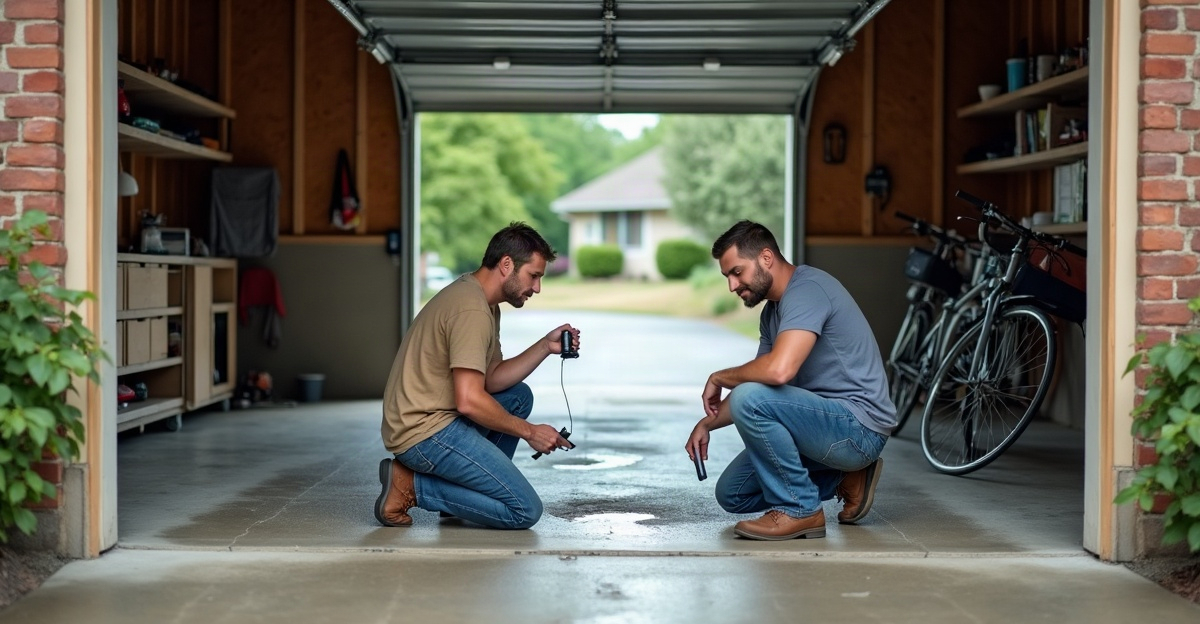
Uneven floors are another major indicator. Some framing variation exists in most homes. What we look for is measurable slope and progression. A simple ball roll test can reveal low spots. A 6-foot level works even better. If the bubble consistently shows slope in one direction across a room, there may be settlement below. A floor that has always had a slight dip may be fine. A floor that becomes more uneven over months or years deserves attention.
Sticking doors and windows are common signs as well. Seasonal swelling from humidity can cause minor sticking, especially in older wood frames. Structural movement is different. Doors that rub across the top or side, fail to latch, or become increasingly out of square often reflect frame distortion caused by shifting supports. When adjustments don’t last, the issue is likely below the surface.
We also watch for gaps forming around trim, cabinets, or window frames. Separation between a kitchen countertop and backsplash often surprises homeowners. That gap usually develops because one section of the home has settled slightly. The materials didn’t shrink. The structure moved.
In basements, bowing or leaning foundation walls are clear warning signs. Even a slight inward curve can mean soil pressure is exceeding what the wall was built to resist. That’s something we take seriously and evaluate closely.
When House Settling Signs Are Normal vs. When They’re a Concern
Every house settles to some degree. Minor settlement is common, especially in the first few years after construction. Concrete cures. Soil adjusts under load. Small movements happen.
Normal settling often shows up as:
- Hairline cracks in drywall or concrete
- Small vertical shrinkage cracks in foundation walls
- Minor seasonal drywall joint movement
What makes us concerned is progression. A crack that stays the same width year after year is usually cosmetic. A crack that grows is different. House settling signs become structural concerns when we see expanding gaps, worsening door misalignment, or measurable floor slope that increases over time.
Progression matters more than a single defect.
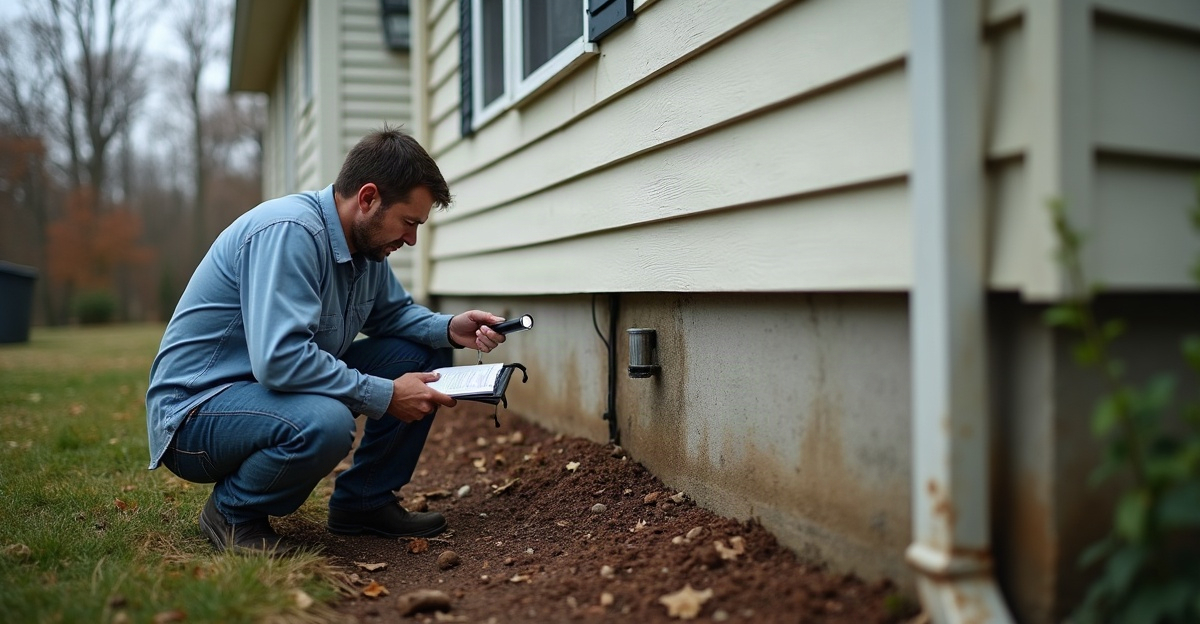
We recommend documenting suspicious cracks with clear photos and dates. A simple pencil mark at the crack edge can help indicate growth. If we can see that a crack widened by even an eighth of an inch over several months, that tells us movement is ongoing.
Visual symptoms are indicators, not final diagnoses. A drywall crack doesn’t automatically mean a structural failure. At the same time, ignoring widening cracks can allow a manageable repair to grow into a bigger structural correction. When movement is suspected, a professional evaluation helps determine whether stabilization is needed or the issue is purely cosmetic.
What Causes Foundation Movement in Minnesota Homes
In Bloomington and across the Twin Cities area, soil and climate drive most foundation movement.
Freeze-thaw cycles play a major role. Minnesota frost depth can push several feet into the ground. When saturated soil freezes, it expands. That expansion exerts upward and lateral pressure on foundations. In spring, thawing soil contracts and softens. This cycle repeats every year. Over time, it can shift footings and crack foundation walls.
Clay-heavy soils add another layer of movement. Clay expands when wet and shrinks during dry periods. During heavy rainfall or snowmelt, clay soil swells against foundation walls. In drought conditions, it pulls away, leaving voids that reduce support. This expansion and contraction transfers stress directly into the structure.
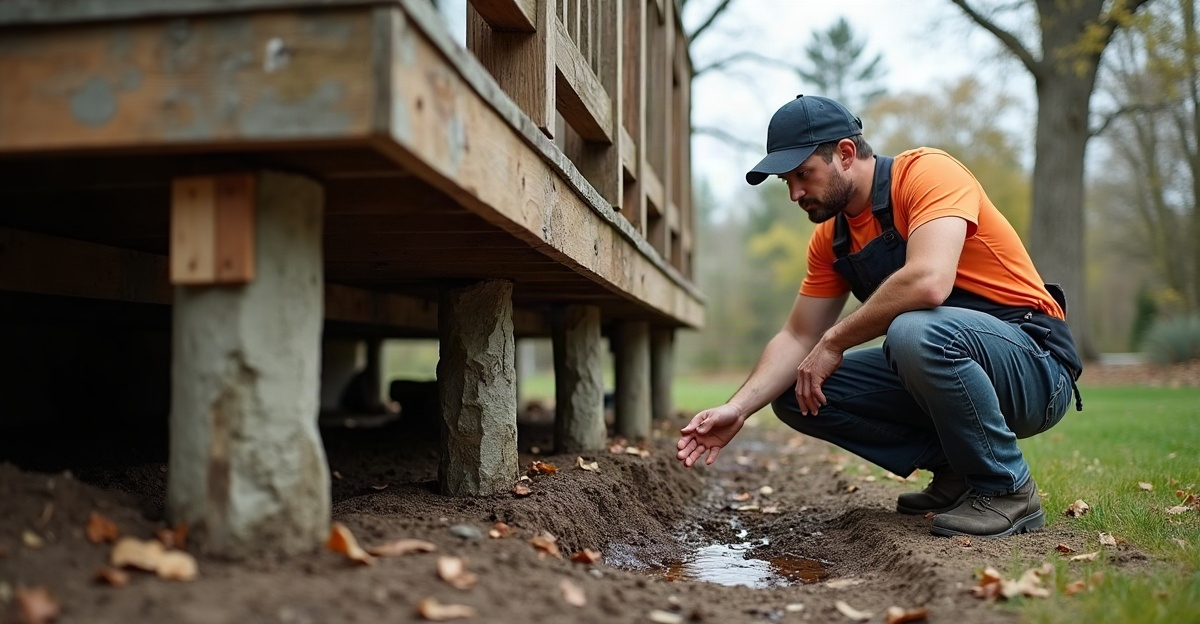
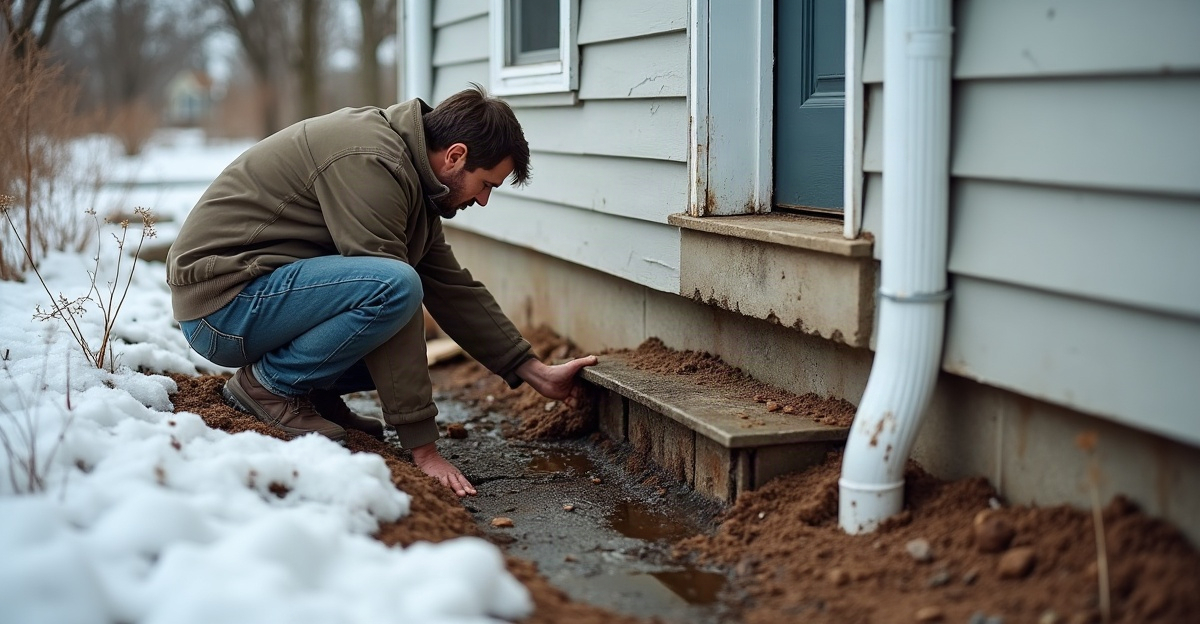
Seasonal moisture swings also matter. Poor drainage, clogged gutters, or improper grading can keep soil saturated along one side of a house. That uneven moisture leads to uneven support. One corner settles while another stays firm, resulting in diagonal cracks and uneven floors.
We often see problems under additions, garages, and decks where fill soil wasn’t compacted properly. Recently disturbed soil needs proper compaction in lifts. If that step was rushed, the soil gradually compresses under weight, causing settlement long after construction is complete.
Older homes experience natural long-term settlement as well. Over decades, soil slowly consolidates. In many cases, the movement eventually stabilizes. In others, water intrusion or drainage changes restart the process.
Soil movement transfers pressure into concrete and framing. That pressure causes cracked foundation walls, bowed basement walls, and sloping floors above. The building responds to what the soil is doing underneath.
How Foundation Problems Affect Additions, Decks, and Garages
Stable footings are critical before building any addition or exterior structure. If the original foundation is already moving, adding weight makes it worse.
We frequently repair settled additions that have begun separating from the main house. A small gap appears where the addition ties into the original structure. Interior trim cracks. Floors slope. Exterior siding joints split. Those are all signs that the new section settled at a different rate.
Before building, evaluating support conditions is the responsible first step. Addressing movement early prevents future structural corrections.
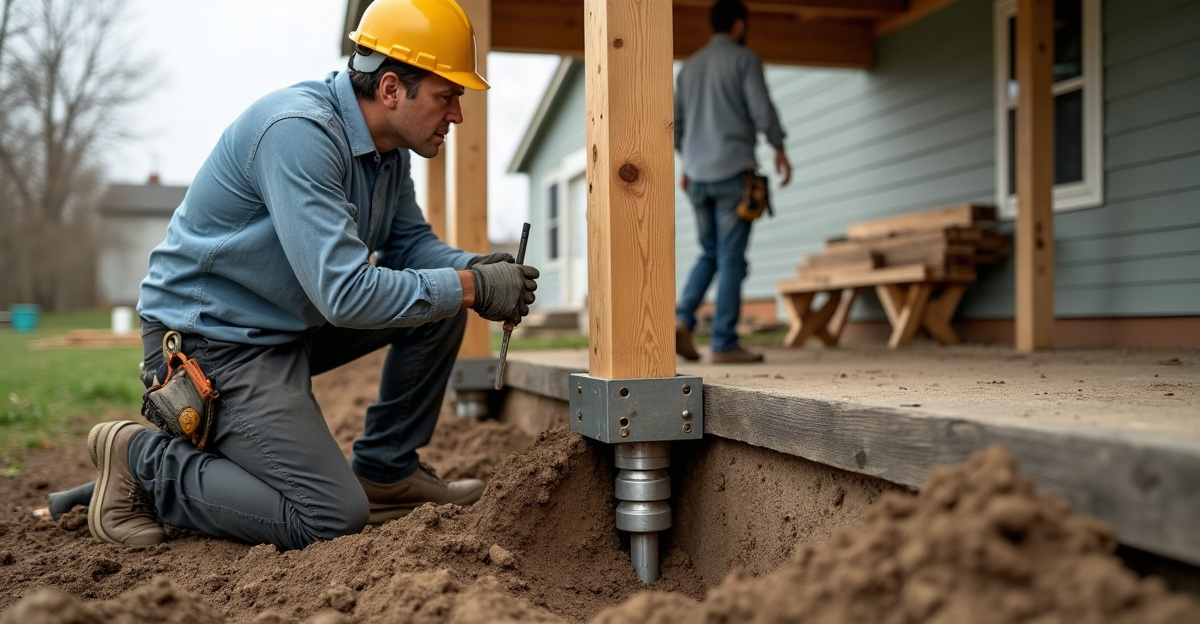
When stabilization is needed, we often perform foundation repair and stabilization to stop ongoing settlement. For new builds or settling additions, specialized systems such as helical pier installation can transfer load to deeper, more stable soil layers. For lighter exterior structures, proper deck footing support ensures seasonal soil shifts don’t lift or tilt posts.
Builders and remodelers should confirm soil stability before investing in structural upgrades. Correcting underlying support first protects the finished work. That approach prevents cracked tile, misaligned doors, and long-term callbacks.
When to Call a Professional for Evaluation
Certain conditions justify a closer look.
- Horizontal foundation wall cracks
- Widening diagonal or stair-step cracks
- Repeated water intrusion combined with cracking
- Measurable floor slope or sagging beams
- Doors and windows moving farther out of square
- Visible wall bowing or displacement in a basement
At the same time, not every crack is an emergency. Small, stable shrinkage cracks are common. The goal is to determine whether movement is ongoing.
If these signs are showing up in a home in Bloomington or the Minneapolis area, a professional evaluation helps clarify the situation. As an experienced helical pier contractor, we focus on identifying the root cause and recommending practical solutions. The objective is stability and long-term performance, not unnecessary work.
Overview of Foundation Stabilization and Repair Options
Stopping movement requires addressing the source of instability. Cosmetic patching alone doesn’t solve structural shifting.
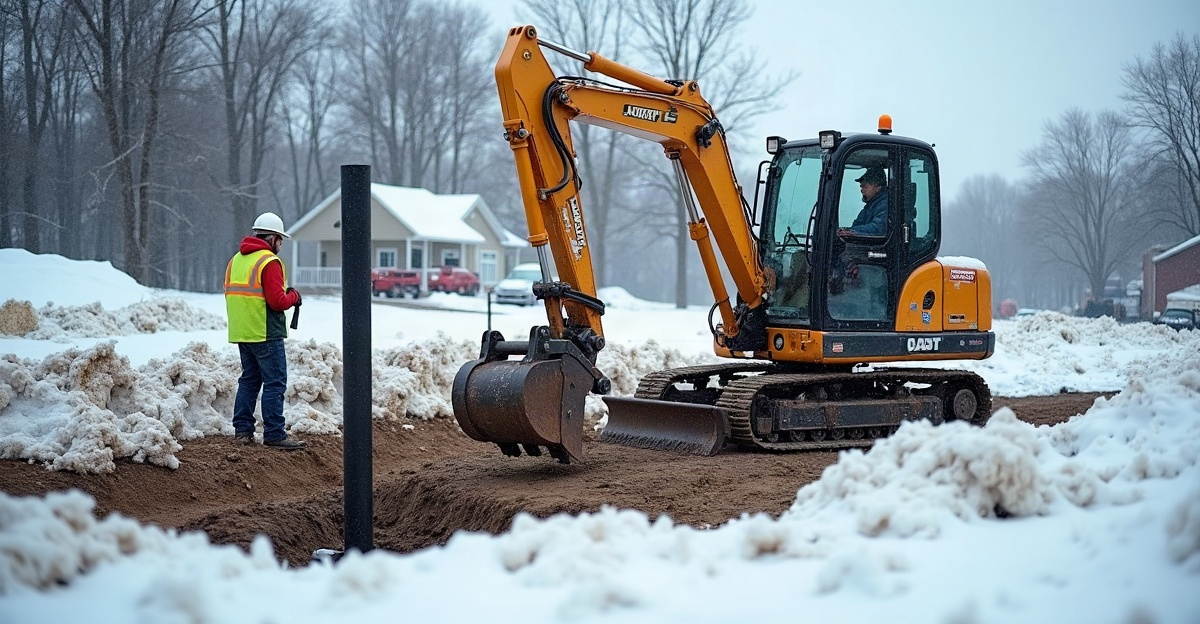
Underpinning methods strengthen and support existing footings. In many Minnesota soil conditions, helical pier systems provide reliable support by anchoring into deeper load-bearing strata below frost-affected layers. These piers can support settling foundations and additions built on unstable surface soils.
Push piers are another option in certain load-bearing situations, particularly when heavier structures require steel brackets driven to refusal depth.
Drainage corrections also play an important role. Regrading soil, extending downspouts, and managing surface water reduce hydrostatic pressure and soil saturation that contribute to cracked foundation walls and basement movement.
The correct approach depends on soil type, extent of settlement, structural load, and site conditions. Helical piers are a proven solution in many frost and clay-related settlement cases, but they aren’t the answer in every scenario.
The long-term goal is straightforward: stop active movement, stabilize the structure, and prevent further damage. Once the foundation is secure, cosmetic repairs hold. Floors level out. Doors function properly again. Addressing the root issue protects the home for the long haul.