What Causes Foundation Settlement in Minnesota?
Foundation settlement in Minnesota occurs when shifting soil beneath a home loses its ability to support the structure evenly. In our experience, clay-heavy soils, wide moisture swings, and deep freeze-thaw cycles drive most settlement issues across the state. Expansive clay, spring thaw saturation, summer drought, poor compaction in newer developments, and inconsistent drainage combine to create uneven movement under footings and slabs. We often see these factors overlap, which accelerates damage if we don’t address them early.
Key Takeaways
- Expansive clay soils in central and southern Minnesota swell when wet and shrink when dry, which creates uneven support beneath foundations. We monitor these seasonal shifts closely because repeated expansion and contraction place stress on concrete and structural connections.
- Freeze-thaw cycles and deep frost penetration cause soil expansion in winter and softening during thaw. We see this pattern lead to cracking, vertical displacement, and long-term structural movement if footings sit above the frost line or lack proper protection.
- Poor soil compaction and shallow footing depth in newer construction contribute to gradual compression and settlement over time. We recommend verifying compaction standards and footing depth during construction, since correcting these issues later requires significantly more work.
- Inconsistent moisture from drainage problems, oversaturation, drought, or nearby tree roots increases soil instability and imbalance. We improve grading, extend downspouts, and manage root impact to maintain more consistent soil moisture around the foundation.
- Progressive cracks, sloping floors, sticking doors, and exterior sinking signal active settlement that may require professional evaluation and structural stabilization. We document crack patterns, measure floor elevations, and use proven stabilization systems to stop further movement and protect long-term structural integrity.
Foundation Settlement in Minnesota: What It Is and Why It Happens
Foundation settlement happens when a foundation sinks, shifts, or moves because the soil beneath it no longer supports the structure evenly. The concrete itself usually isn’t the root issue—the movement starts in the ground below it.
Soil movement under a foundation is the real driver. When soil expands, shrinks, erodes, or compresses, the support under the footing becomes uneven. One section may stay firm while another softens or drops. That imbalance creates stress in walls, floors, and framing above.
In Minnesota, this issue shows up often because of local conditions. Much of central and southern Minnesota has clay-heavy soils. We also deal with deep frost penetration in winter, heavy spring thaw saturation, periods of summer drought, and fast-paced residential development in suburbs around Bloomington and the Twin Cities metro. Those factors work together to create ongoing soil movement.
It’s important to understand that not all settlement is a construction defect. Natural regional soil behavior plays a major role. The most common causes of foundation settlement here involve expanding clay, freeze-thaw cycles, moisture swings, and soil compaction issues—not necessarily a poorly built home.
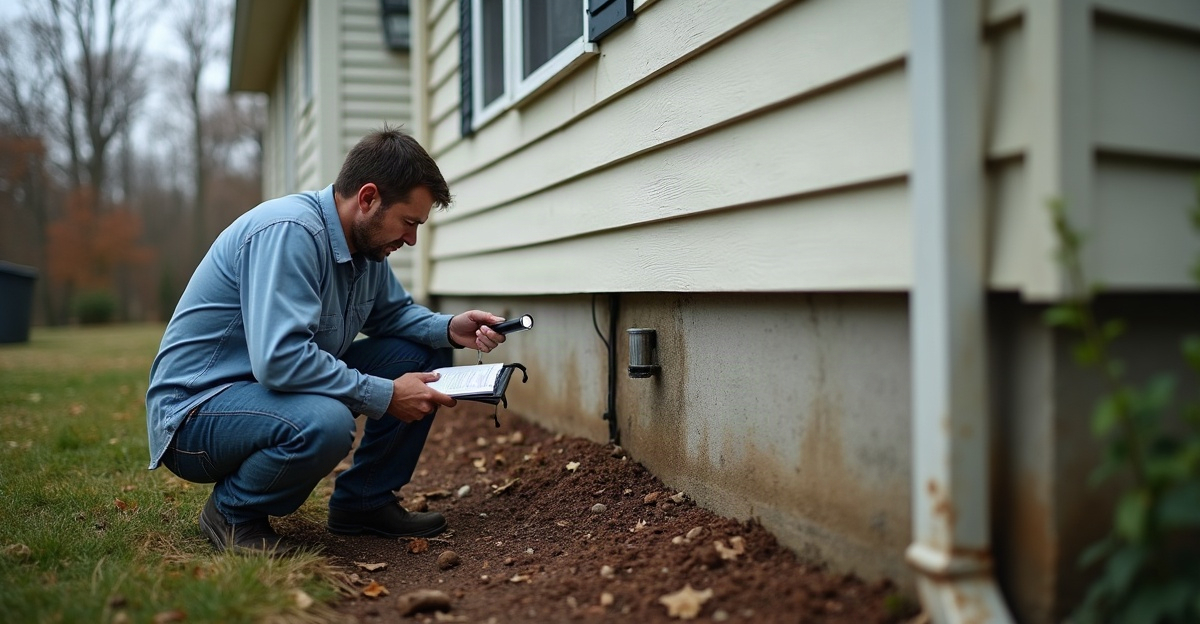
When we look at foundation sinking causes, we always connect visible symptoms to what’s happening below grade. Cracks in drywall, sloping floors, or sticking doors are clues. They point back to shifting soil problems and a soil movement foundation issue underneath. Once we understand that connection, we can decide what needs to be monitored and what needs structural correction.
The Biggest Causes of Foundation Settlement in Minnesota
Several factors drive foundation sinking causes in our area. Most jobs we see involve a combination of these issues rather than a single event.
Primary Soil and Climate Factors
Here’s what creates the most movement beneath foundations in Minnesota:
- Expansive clay soils
Clay-heavy soils swell when wet and shrink when dry. During rainy periods or spring snowmelt, expanding clay pushes up against footings. In drought conditions, the soil shrinks and can leave gaps beneath the foundation. That loss of support leads to uneven settlement. - Freeze-thaw cycles and frost heave
Minnesota frost depth can extend several feet into the ground. Water in the soil freezes, expands, and lifts the soil upward. That process is known as frost heave. When spring arrives and the ground thaws, the oversaturated soil loses strength and may not settle back evenly. Freeze-thaw cycles can cause foundation cracks over time. Repeated expansion and contraction under footings may create vertical, diagonal, or stair-step cracking. - Poor soil compaction during construction
In newer subdivisions, especially where grading happens quickly, fill soil may not be compacted adequately before foundations are poured. Loose soil continues to compress under the weight of the home. That gradual compression creates uneven support and long-term shifting soil problems. - Inadequate footing depth
Footings must extend below local frost depth to reduce frost-driven movement. If they don’t, they’re more vulnerable to seasonal lifting and settlement. - Drought-related shrinkage and tree roots
Extended dry periods cause clay soils to contract. Large trees near the home pull additional moisture from the soil, increasing shrinkage along one side of the structure. That imbalance often shows up as cracks or sloping toward the affected side.
In practice, the causes of foundation settlement usually combine clay behavior, moisture changes, temperature swings, and construction variables. Rarely does one isolated event cause ongoing movement.
How Water and Drainage Problems Make Settlement Worse
Water control is one of the biggest factors in long-term stability. Both excess water and insufficient moisture contribute to settlement.
Oversaturation from poor grading, clogged gutters, short downspouts, or improper drainage systems increases soil instability. When spring thaw hits, Minnesota soil is often heavily saturated for weeks. During that time, soil temporarily loses load-bearing capacity. If the soil under one corner of the home stays wetter longer than the rest, it settles unevenly.
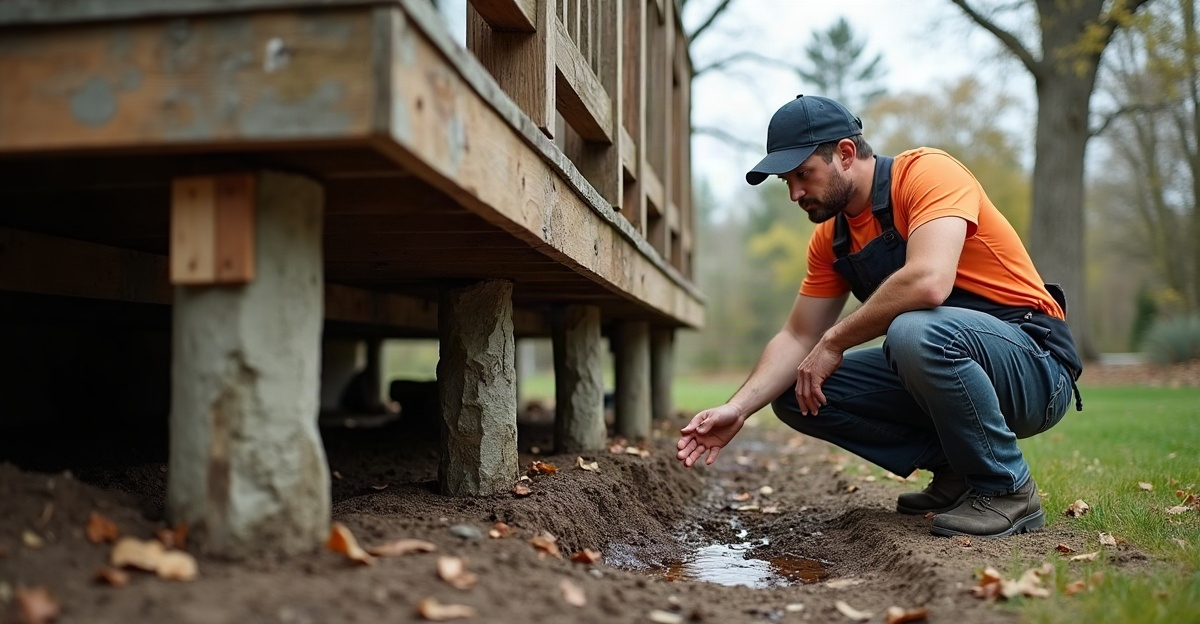
Water pooling near the foundation softens clay soils and increases shifting soil problems. As the soil softens, it compresses more easily under weight. Over time, repeated saturation weakens support beneath footings.
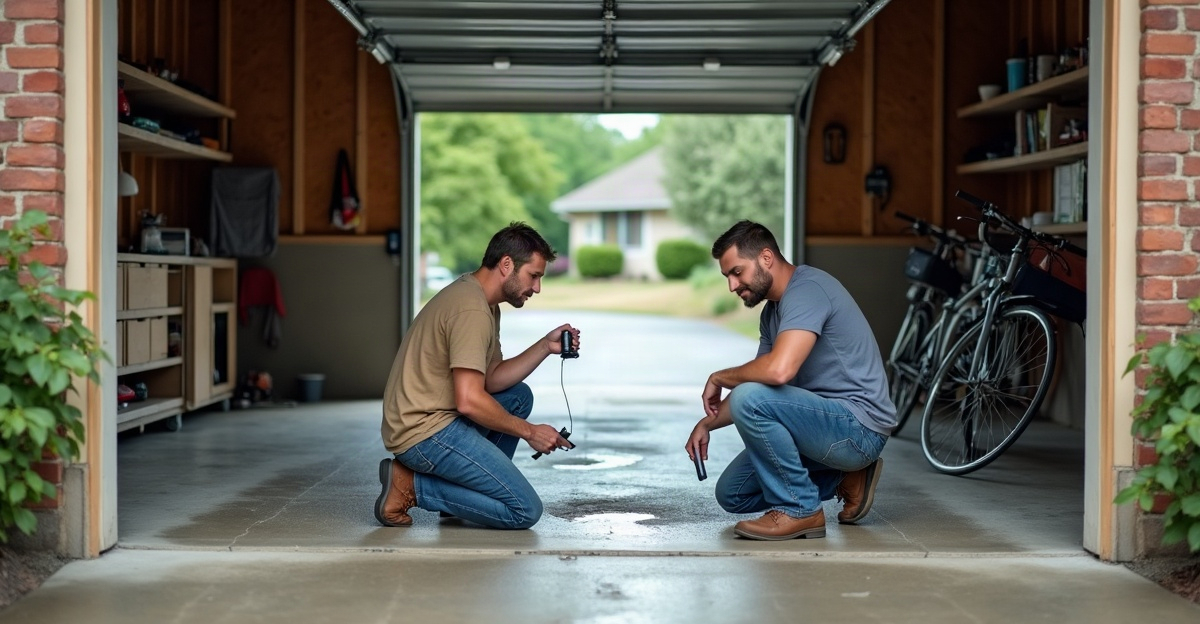
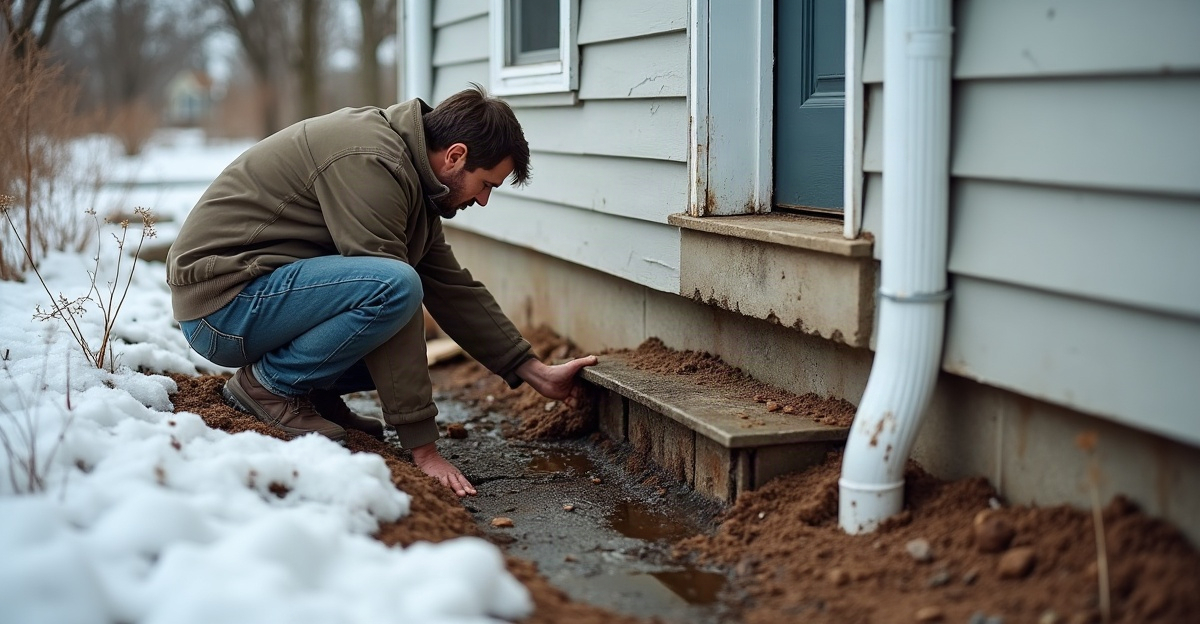
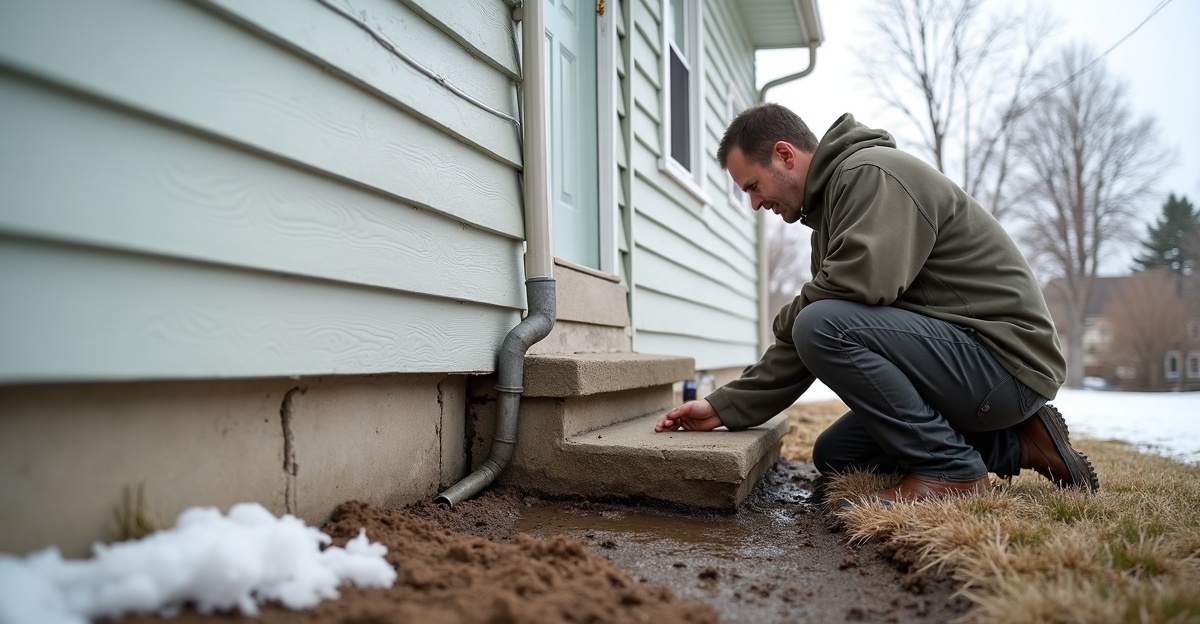
Erosion is another factor. Flowing water can wash soil away from footings, especially around decks, porches, and garages. Voids develop below concrete edges. That’s when we start seeing sinking exterior steps, tilting decks, or cracking slabs.
Dry conditions create the opposite problem. Drought causes clay to shrink and pull away from the foundation. Gaps form below and alongside footings, increasing the chance of uneven movement when moisture returns.
In real job-site conditions, many soil movement foundation issues trace back to inconsistent moisture levels. One side of the home stays wet while another dries out. That repeated imbalance is enough to create long-term causes of foundation settlement even if the original construction was solid.
Warning Signs Homeowners Should Not Ignore
Movement beneath the foundation eventually shows itself inside and outside the home. Some signs are minor. Others indicate structural changes that need attention.
Common warning signs include:
- Wall cracks – Hairline cracks in drywall are often cosmetic and may occur during normal settling and seasonal humidity changes. Stair-step cracking in block foundation walls is more significant. Horizontal cracks may point to lateral soil pressure and structural stress.
- Sloping or uneven floors – This suggests one part of the foundation is settling more than another. The slope may be subtle at first but becomes more noticeable over time.
- Sticking doors and windows – Frames that won’t latch properly or suddenly go out of square often indicate distortion caused by foundation movement.
- Interior gaps – Separation at trim, ceiling joints, or between walls and floors can signal shifting structural framing.
- Sinking exterior concrete – Tilting porches, decks, or exterior steps are strong indicators of soil movement beneath those supports.
It’s important to separate cosmetic settling from structural settlement. Cosmetic settlement typically involves small drywall cracks that don’t widen and don’t affect door or window operation. Structural settlement involves progressive cracking, widening gaps, measurable floor slope, or visible movement in foundation walls.
Minor settlement can be normal in Minnesota, especially in the first few years after construction. However, progressive or uneven settlement that continues year after year should not be ignored.
When to Monitor the Problem and When to Get a Professional Evaluation
Not every crack requires structural repair. Monitoring conditions is reasonable when cracks are small, stable, and not widening. If doors and windows function normally and there are no new signs of movement, documenting changes over time may be enough.
A professional evaluation makes sense when cracks continue to grow or reappear after repair. Noticeable floor slope, multiple symptoms appearing together, or visible exterior foundation wall movement are stronger warning signs. Those conditions point to active soil movement foundation issues rather than minor cosmetic changes.
Long-term structural stability matters more than quick cosmetic fixes. Spackling over drywall cracks without addressing soil behavior below doesn’t stop movement—it only hides it temporarily.
Local expertise is critical. Diagnosing settlement in Minnesota requires understanding frost depth, clay-heavy soils, and spring thaw saturation around Bloomington and the Twin Cities metro. Conditions in this region differ from other parts of the country, and repair strategies must reflect those realities.
How Foundation Support Solutions Address Ongoing Settlement
When settlement is active or progressive, the goal is to stabilize the structure by transferring its weight to more reliable soil layers. Surface soils in Minnesota move with moisture and frost, while deeper soils are typically more stable.
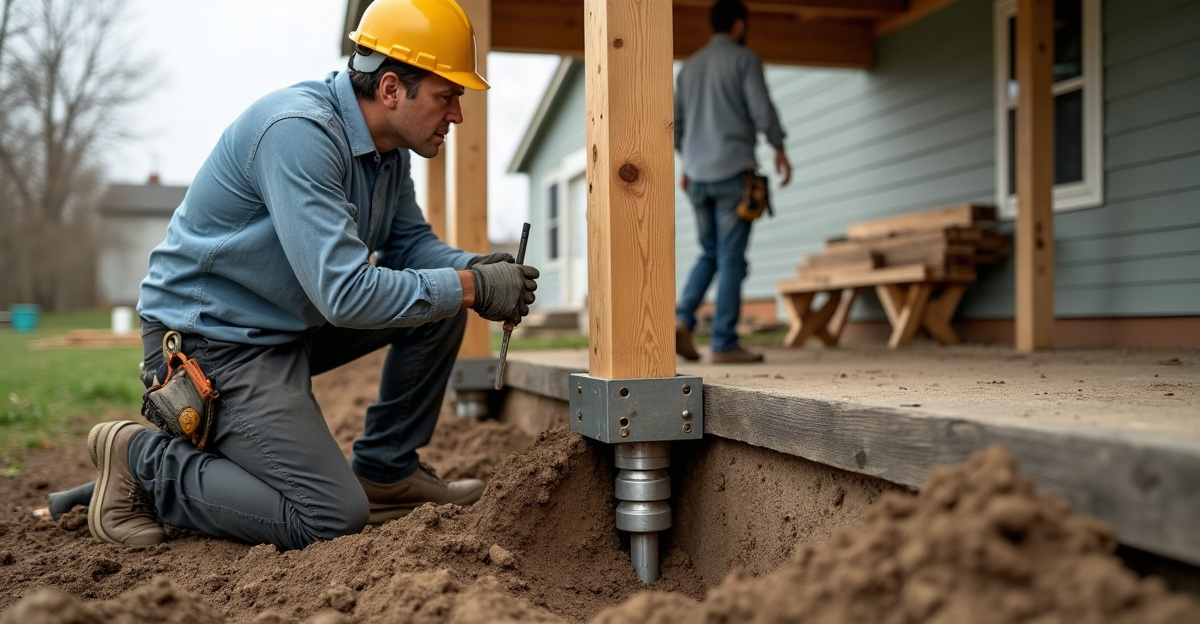
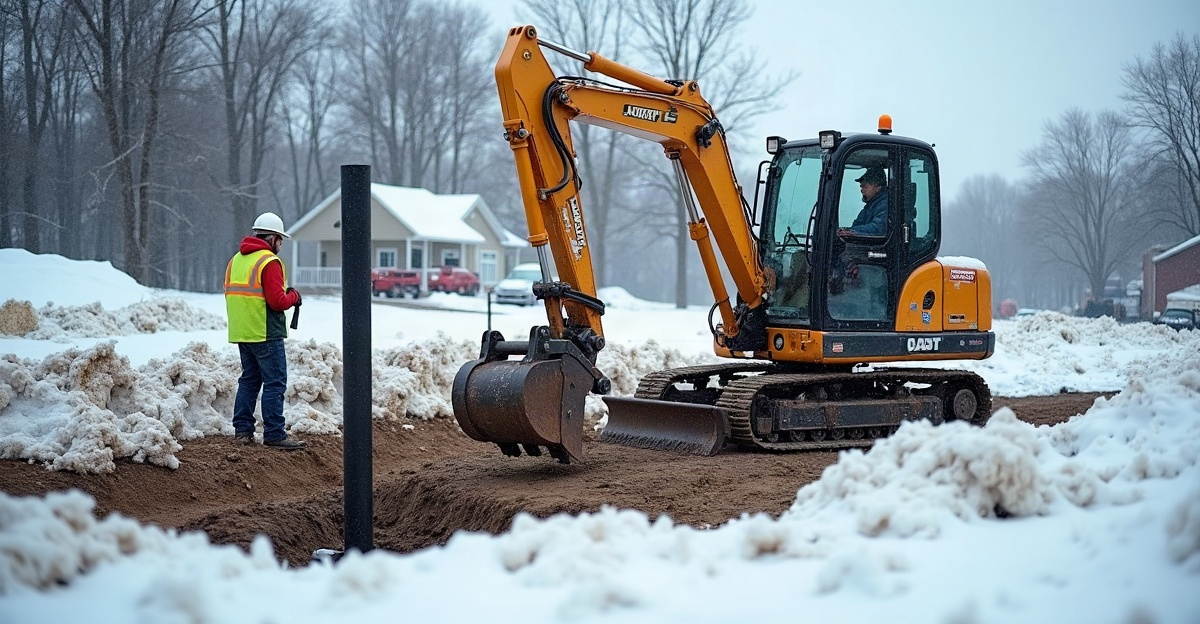
One proven approach involves installing steel piers that extend below unstable surface layers. With professional helical pier installation, helical piers are advanced into the ground until they reach load-bearing strata unaffected by seasonal moisture swings. The foundation load is then transferred from shifting upper soils to deeper, more consistent layers.
Helical piers are often used for structural repairs, additions, garages, and decks where ongoing shifting soil problems exist. They’re also effective as part of comprehensive foundation repair and stabilization when a home shows repeated settlement.
Traditional concrete footings rely heavily on the behavior of the soil immediately beneath them. If that soil expands, shrinks, or erodes, movement continues. Pier systems address that limitation by anchoring below the active zone of seasonal change.
For homeowners and builders, results are what matter most. Proper foundation support restores consistent bearing conditions, reduces future movement, and protects long-term structural performance. That’s the focus provided by an experienced helical pier contractor working in Minnesota’s challenging soil and climate conditions.