Why Decks Fail Without Proper Footing Support?
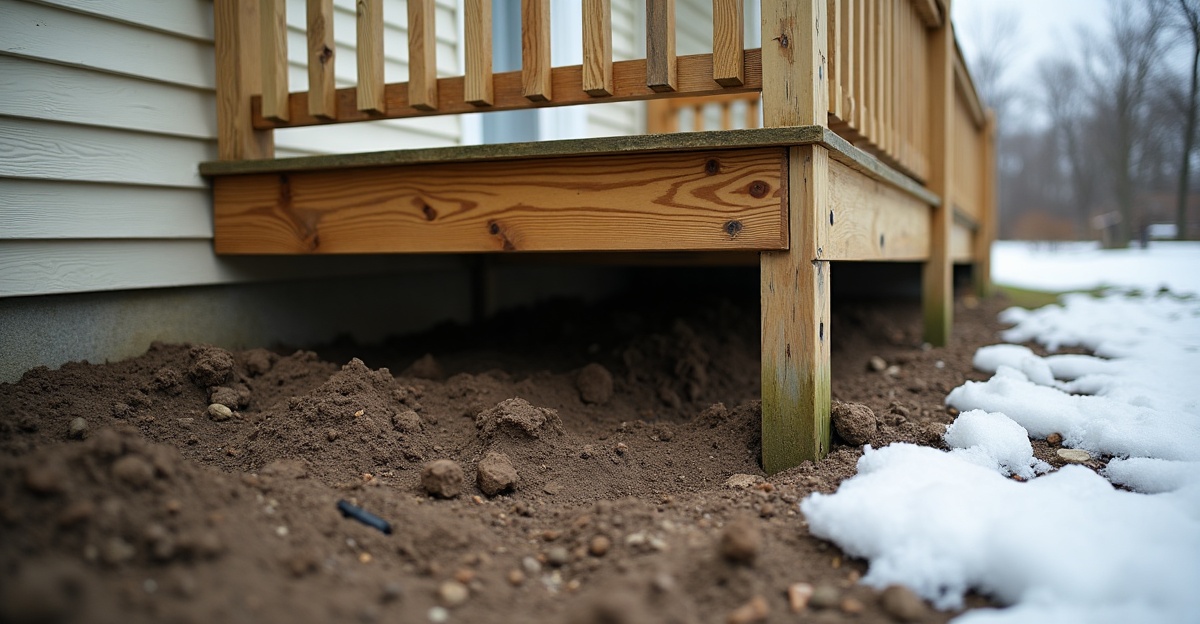
Deck footing problems develop when a deck’s weight fails to travel through a continuous load path into stable, load-bearing soil. That break in support leads to movement that shows up in the framing above. In climates like Minnesota, shallow footings, frost heave, weak soil bearing capacity, and poor load calculations work together to cause settling, shifting, and long-term structural instability. We see these issues often, and they almost always trace back to how the load reaches the ground.
Key Takeaways
- A stable deck depends on a continuous load path that carries weight from the framing down into competent, undisturbed soil.
- Frost depth, freeze-thaw cycles, and saturated or clay-heavy soils are common causes of footing movement and settlement.
- Early warning signs include uneven surfaces, loose railings, gaps at the ledger board, and posts that are out of plumb.
- Cosmetic fixes like shimming or patching concrete do not correct poor load transfer or weak supporting soil.
- Proper footing support requires accurate load calculations, frost protection, and anchoring into reliable load-bearing strata.
Deck footing problems rarely begin with “bad concrete.” They start when the deck’s weight isn’t transferred into stable, load-bearing soil.
Every deck relies on a continuous load path. That load path runs from deck boards to joists, from joists to beams, from beams to posts, from posts to footings, and finally from footings into stable soil. If any point along that path fails, the structure above it moves. When footings shift, everything above them follows.
In Minnesota, frost depth and seasonal freeze-thaw cycles play a major role. The frost depth Minnesota experiences each winter can push shallow footings upward and then leave empty space under them when the soil thaws. Decks often look solid for the first year or two. Then a few harsh winters expose unstable deck support and the real deck settling issues start to show.
The problem usually isn’t what we see at the surface. It’s what’s happening below grade. If the footings don’t reach load-bearing soil, the deck never had a stable foundation in the first place.
What Causes Deck Footing Problems?
Deck footing problems almost always tie back to soil conditions, frost, or undersized supports. Here’s what we commonly see across Minnesota.
Common Structural and Soil Causes
- Shallow footings installed above frost depth. When they sit too high, frost heave lifts them during winter.
- Frost heave itself. Water in the soil freezes, expands, and pushes concrete upward. When it thaws, it leaves voids behind.
- Poor soil bearing capacity. Clay-heavy soils around areas like Bloomington hold water and shift as moisture levels change.
- Organic or loose backfill. Footings placed in disturbed soil are far more likely to settle.
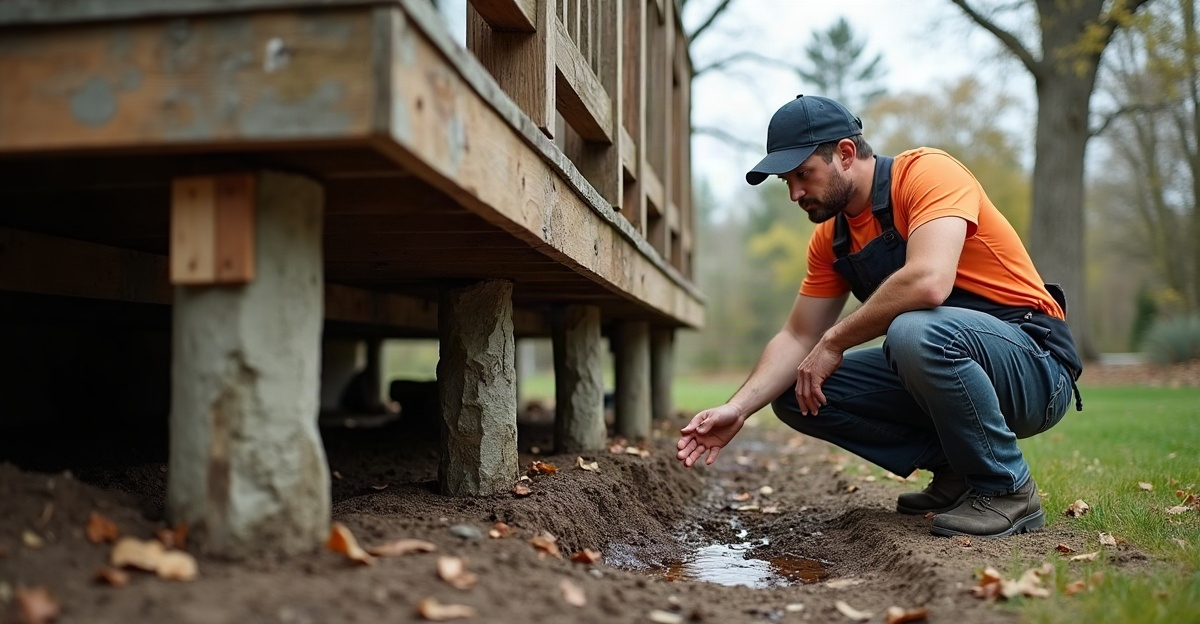
- Drainage problems. Saturated soil loses strength and can’t properly support the load.
- Undersized footings that don’t match the actual deck weight.
Sinking deck footings often start with one of these conditions. In many cases, depth alone isn’t enough. A footing can sit below frost depth and still fail if it doesn’t reach competent load-bearing strata.
We’ve also seen issues where the load calculations didn’t account for Minnesota snow loads. Snow adds significant weight, especially on larger or covered decks. If the footing size doesn’t reflect that reality, deck settling issues follow.
For a broader look at how soil drives movement across structures, we often point people to what causes foundation settlement in Minnesota. The same soil behavior applies to decks.
Signs of Sinking Deck Footings and Unstable Deck Support
Most homeowners notice symptoms before they understand the cause. Sinking deck footings show up in subtle ways at first.
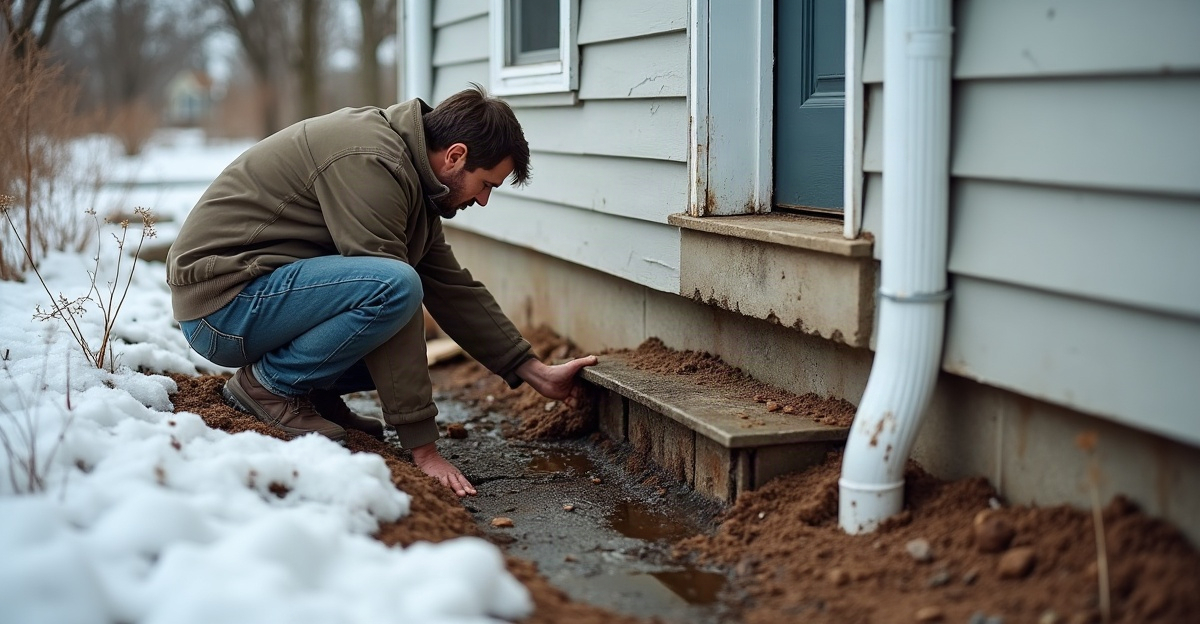
An uneven deck surface is one of the earliest signs. It becomes obvious after winter when one section sits higher or lower than the rest. Railings that once felt tight start to loosen. These changes indicate unstable deck support beneath the posts.
Gaps at ledger board connections are another warning sign. If the deck pulls slightly away from the house, that gap tells us the footings moved. Stairs can separate or tilt as well. Posts may shift at their bases or appear out of plumb.
In more severe deck settling issues, movement transfers back to the home. Doors near the deck might stick or rub. That movement isn’t cosmetic. It reflects a broken load path below.
These aren’t surface defects. They’re structural symptoms. When we see them, we assume something has changed under the footings until proven otherwise.
Why Quick Fixes Don’t Solve Structural Footing Problems
Temporary fixes often mask deck footing problems without correcting the root cause.
Shimming posts can re-level a beam for a short time. However, shims don’t stop soil from shifting. If the load transfer into stable soil isn’t corrected, the deck will move again.
Patching cracked concrete only addresses what’s visible. It doesn’t change poor soil bearing capacity underneath. Re-fastening a ledger board might tighten the connection to the house, yet movement returns if the footings continue to settle.
These cosmetic fixes ignore the fundamental issue: improper load transfer. Stability requires that the deck’s weight reaches consistent, undisturbed soil that can carry it year-round.
True foundational solutions deal with frost protection, soil strength, drainage, and accurate load calculations. Anything less simply delays the problem.
What Proper Deck Footing Support Requires
Stability starts with reaching the right soil layer. That means load-bearing strata capable of supporting the deck in all seasons.
Correct load calculations come first. Deck size, framing design, and expected snow loads in Minnesota all factor in. Once we know the load, we match it to a footing system designed for it.
Frost protection is mandatory. Footings must extend below local frost depth and remain isolated from soil that will freeze and expand. Proper installation also matters. Supports must be placed in undisturbed soil with verification along the entire load path.
Understanding the difference between traditional concrete footings, sonotubes, and helical piers is critical.
- Traditional concrete footings rely on mass and surface area. They depend heavily on soil bearing capacity at their base.
- Sonotubes form poured concrete columns in drilled holes, also relying on base soil strength.
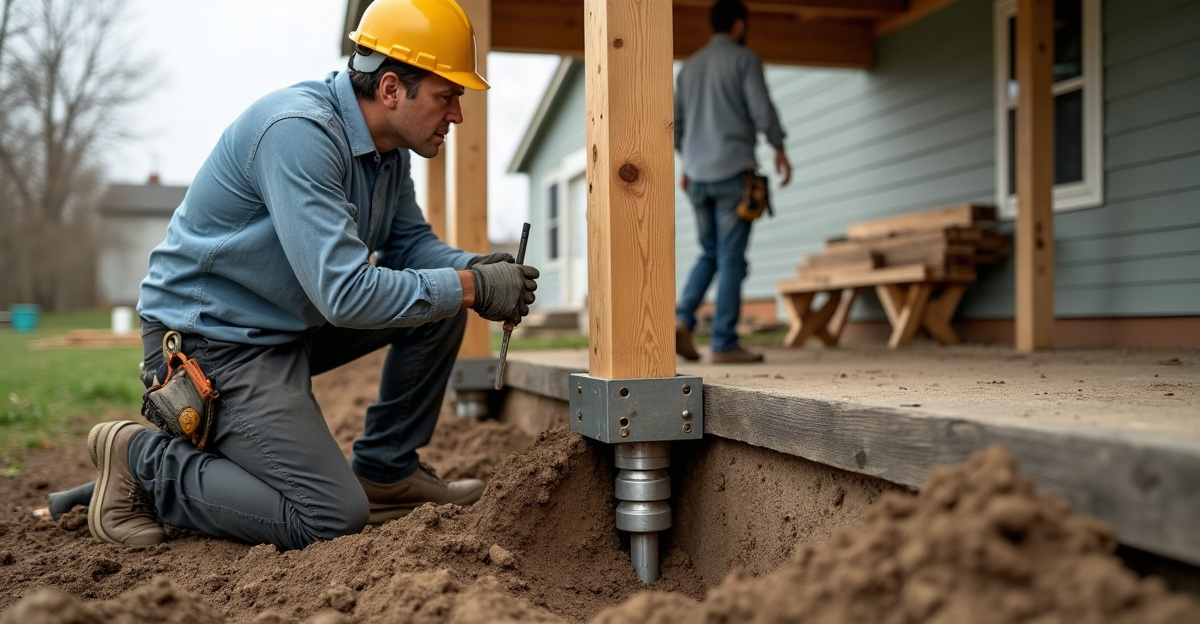
- Helical piers transfer load differently by mechanically advancing into stable soil using torque to confirm capacity.
Because helical piers screw into the ground, they bypass weaker upper layers and anchor into stronger strata. For decks in challenging soil, we install helical pier installation systems that provide immediate, measurable capacity.
For homeowners facing repeated movement, our deck footing support services focus on rebuilding a stable load path from the ground up. Comparing systems side by side helps clarify options. We often recommend reviewing helical piers vs concrete footings to understand how each approach handles frost protection and soil variation.
When to Consider a Specialty Footing Solution
Some sites demand more than standard concrete.
Clay-heavy or consistently wet ground increases the risk of deck footing problems in Minnesota. Repair situations are another clear case. If existing concrete has already shifted, pouring new concrete in the same soil may simply repeat the failure.
Limited access properties also influence the choice. Tight yards or built-out landscapes don’t always allow large excavation equipment. Time-sensitive projects benefit from systems that don’t require long concrete cure times.
Sinking deck footings repair is absolutely possible. The key is addressing soil conditions and restoring proper load transfer. If the fix doesn’t reach stable soil, the problem remains.
Helical piers for decks often make sense in these scenarios. They perform well where traditional concrete footings have lifted from frost heave or settled due to poor soil bearing capacity. They also provide stable long-term support for new decks built on questionable ground.
For broader guidance on when specialized systems are appropriate, review when helical piers should be used. The same engineering principles apply to exterior structures.
How deep should deck footings be in Minnesota? They must extend below local frost depth and reach consistent, load-bearing soil. Depth alone doesn’t guarantee success. Soil strength at that depth does.
Decks don’t fail because the framing was weak. They fail because the ground under them wasn’t properly evaluated or supported. When early deck settling issues appear, the right move is a qualified evaluation of soil conditions and footing performance. For active movement or confirmed sinking, our foundation repair and stabilization approach can restore structural stability without tearing everything out.
Stable support starts below grade. Once that’s handled correctly, the structure above it has a real chance to last.