When Should You Use Helical Piers For A Foundation?
Knowing when to use helical piers depends on soil stability, frost depth, drainage, and visible settlement rather than defaulting to traditional concrete footings. We see this often in Minnesota’s clay-heavy soils and deep freeze-thaw cycles. In these conditions, helical piers often provide a smarter option for decks, additions, garages, and foundation repairs where shallow footings have failed or can’t reach stable bearing soil.
Key Takeaways
- We recommend helical piers when we see settlement issues like cracked walls, sinking decks, sticking doors, or shifting slabs caused by unstable or shallow footings.
- Clay soils, poor compaction, water pooling, erosion, and deep frost increase movement risk and make deep load transfer essential.
- We rely on helical piers for decks, porches, additions, garages, and foundation stabilization projects that need immediate load-bearing capacity.
- Tight-access sites benefit from helical piers because we install them with minimal excavation and reduce disruption to landscaping or nearby structures.
- Traditional concrete footings still perform well in stable, well-drained soil at proper depth, but we always match the support system to site conditions for long-term performance.
Signs You May Need Helical Piers Instead of Traditional Footings
We look at real jobsite conditions before deciding when to use helical piers. In Bloomington and surrounding Minnesota communities, soil conditions and weather patterns play a major role in that decision.
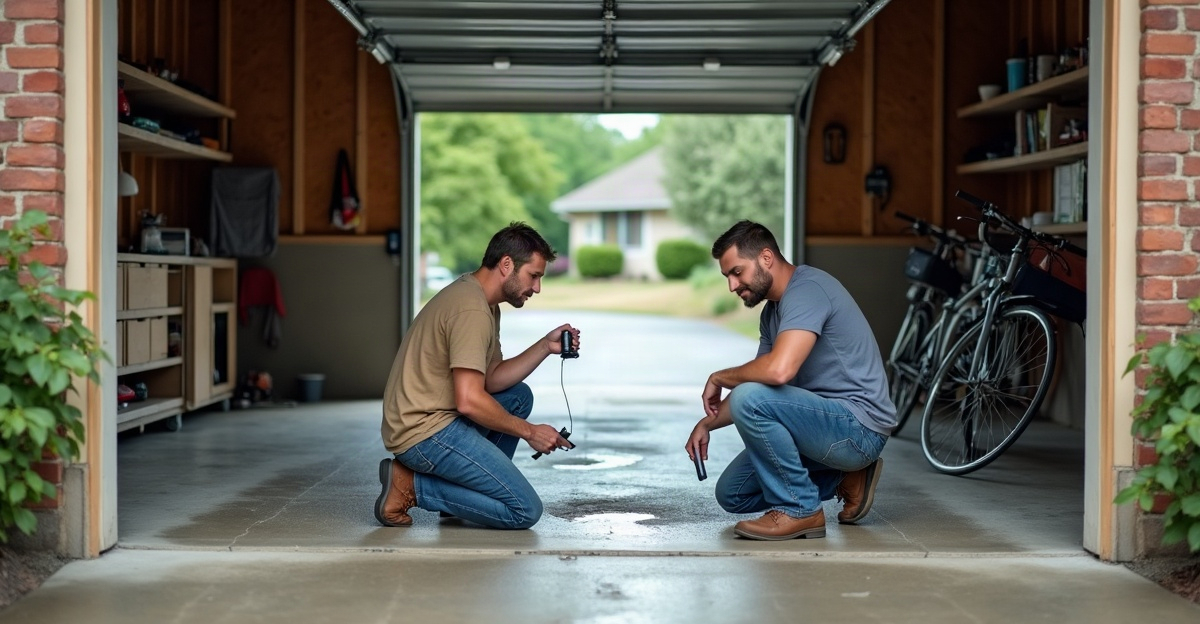
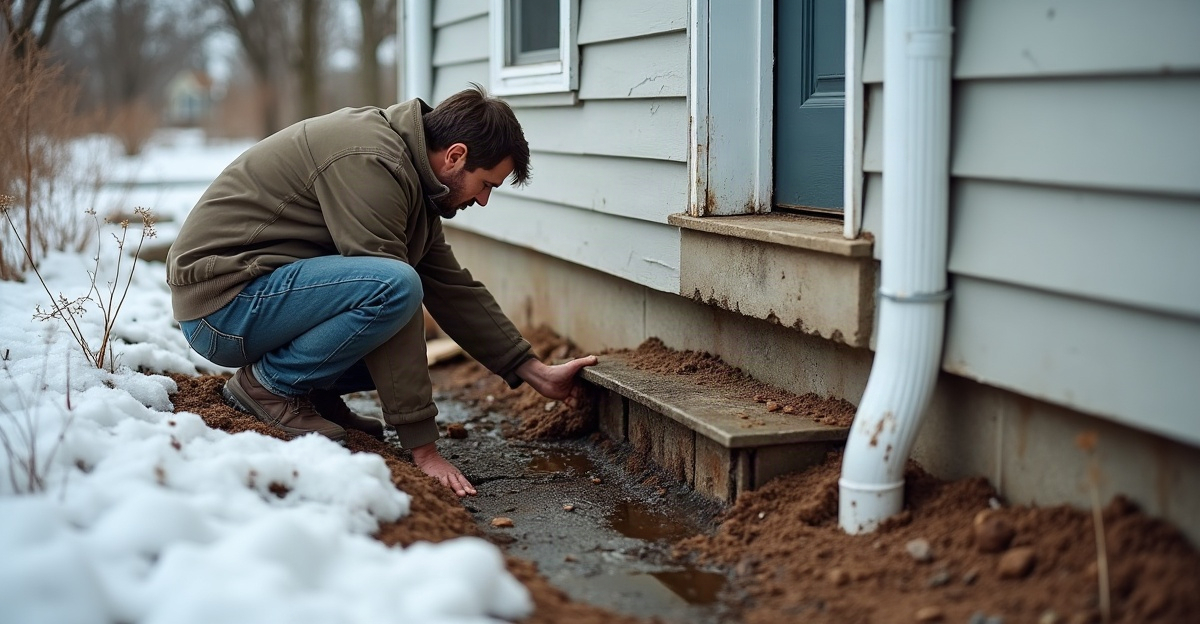
Previous movement is one of the biggest warning signs. If a deck has sunk, a porch has pulled away from the house, or a garage slab has shifted, standard concrete footings likely didn’t reach stable soil. We often see cracked foundation walls, uneven floors, and doors or windows that stick. Those aren’t cosmetic issues. They point to settlement.
Soil type also matters. Clay-heavy soils are common here. They hold water, expand when wet, and shrink during dry spells. Wet, soft soils and poorly compacted fill create similar problems. Building on unstable soil without going deep enough leads to movement over time.
Frost depth is another factor. Minnesota requires footings to extend well below grade. If they don’t, freeze–thaw cycles push and lift shallow concrete. Spring moisture changes then soften the soil, and the structure can settle back unevenly.
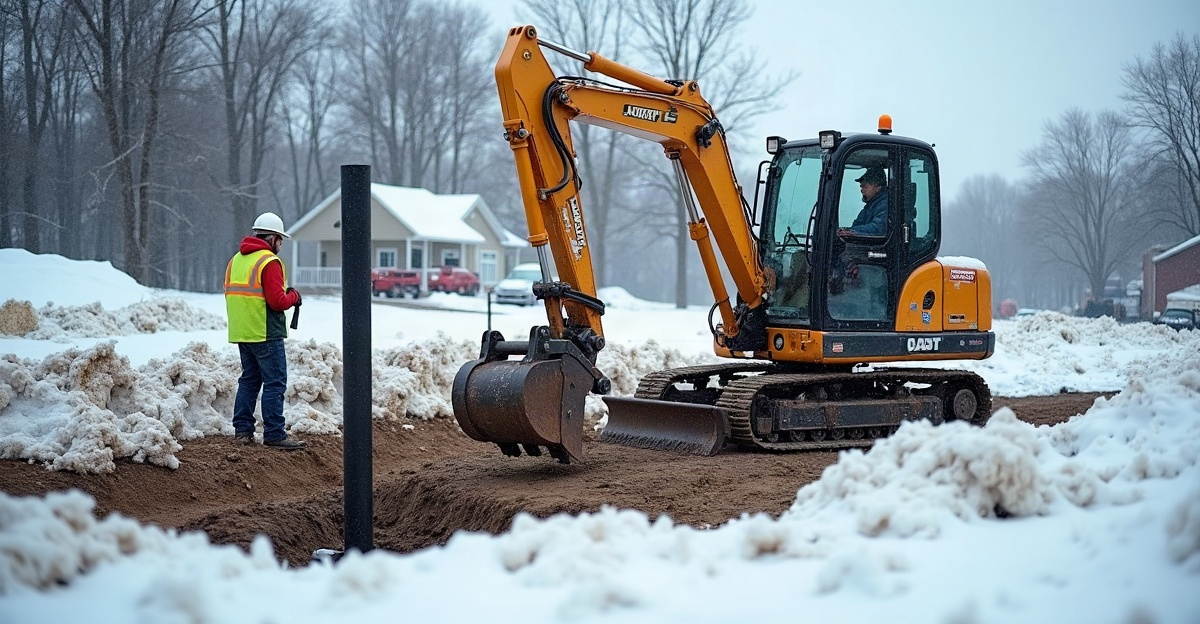
Limited access can push us toward helical piers as well. Additions built close to an existing home don’t leave much room for excavation equipment. In those cases, large concrete footings can damage nearby foundations or landscaping.
We also recommend looking closely at sites with a history of:
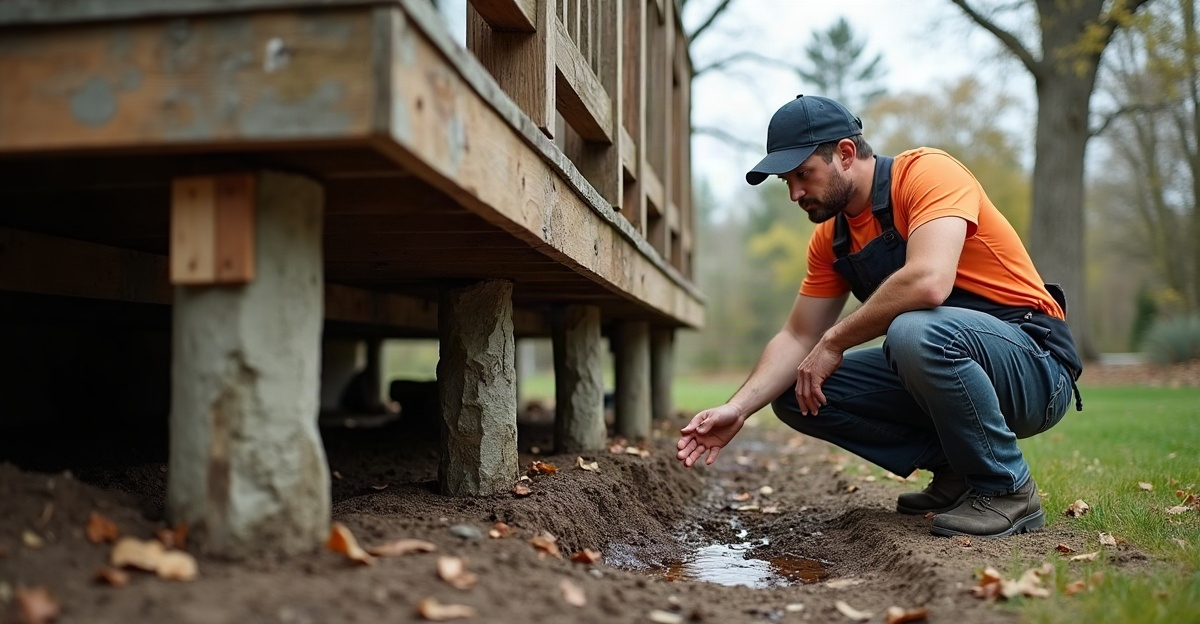
- Water pooling around the structure
- Erosion along foundation walls
- Poor soil compaction from previous construction
Helical piers aren’t always the right answer. In stable, well-drained soil with proper depth and compaction, traditional footings perform well. The key is matching the foundation support system to the site conditions instead of assuming one method fits every project.
Common Projects Where Helical Piers Make Sense
Helical piers work well in both new construction and repair situations.
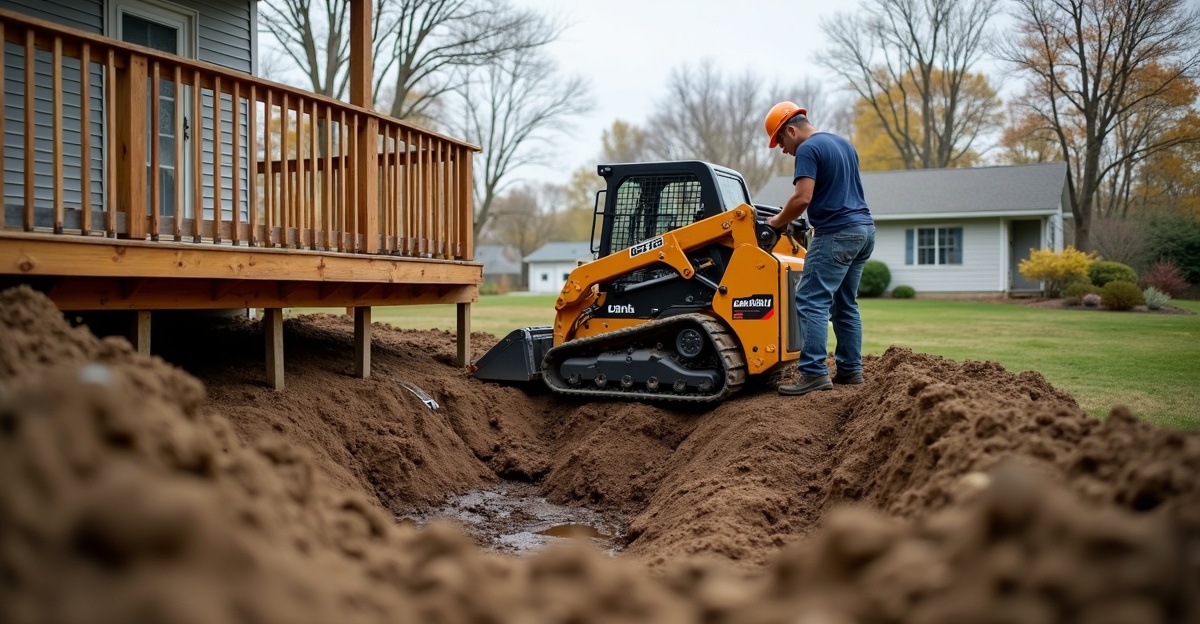
For new construction, we frequently use them for decks, porches, home additions, garages, and small accessory structures. These projects need dependable footing support systems that resist frost movement and long-term settlement. For example, our deck footing support services provide immediate stability without waiting on concrete to cure.
Additions and garages benefit the same way. Tight property lines and existing structures limit excavation space. In those cases, targeted piers installed precisely where loads transfer make sense. Projects involving garage foundation support or foundation support for additions often require that level of control.
On the repair side, helical piers are a proven solution for settling foundations, cracked basement walls, sinking footings, and even leaning chimneys. We mechanically advance the piers to stable, load-bearing soil and transfer the structure’s weight to that deeper stratum. Our foundation repair and stabilization process focuses on stopping movement first, then restoring support.
Immediate load-bearing capacity is another advantage. Concrete needs time to cure. Helical piers can often be loaded right after installation, keeping projects moving.
Reduced excavation also protects what’s already there. Landscaping, driveways, patios, and nearby structures stay largely intact because we’re not digging large holes.
Concrete still works well in stable, well-drained soil where we can reach frost depth without issue. In poor soil, deep frost zones, or unstable soil foundation conditions, helical piers usually outperform standard concrete footing support systems over the long term.
Soil and Frost Conditions in Minnesota That Drive the Decision
Clay-heavy soils dominate much of Minnesota, including Bloomington. Clay expands when saturated and contracts as it dries. That repeated movement places stress on shallow foundations.
Freeze–thaw cycles amplify the issue. Water in the soil freezes, expands, and lifts improperly supported footings. When it thaws, the soil doesn’t always settle back evenly. Over several winters, small shifts become visible structural problems.
Frost depth requirements force builders to go deep. In many cases, that means digging well below grade. Even then, if the soil below the footing is unstable or poorly compacted, settlement can still occur.
Spring adds another challenge. Melting snow and seasonal rains saturate the ground. Soil softens, especially around foundations that already have drainage issues. Structures supported by shallow footings can drop during this period.
Helical piers address these conditions by driving steel shafts with helices deep into the ground until they reach stable, load-bearing soil below the active frost zone. Instead of relying on upper soil layers that move with moisture and temperature, the load transfers to deeper, more consistent strata.
From years of local experience, we’ve seen shallow concrete footings fail in clay soils that look solid at first glance. We’ve also seen properly installed helical systems perform well for decades. Depth, soil verification, and correct load transfer determine long-term performance in this region.
How Helical Piers Work (Without the Engineering Jargon)
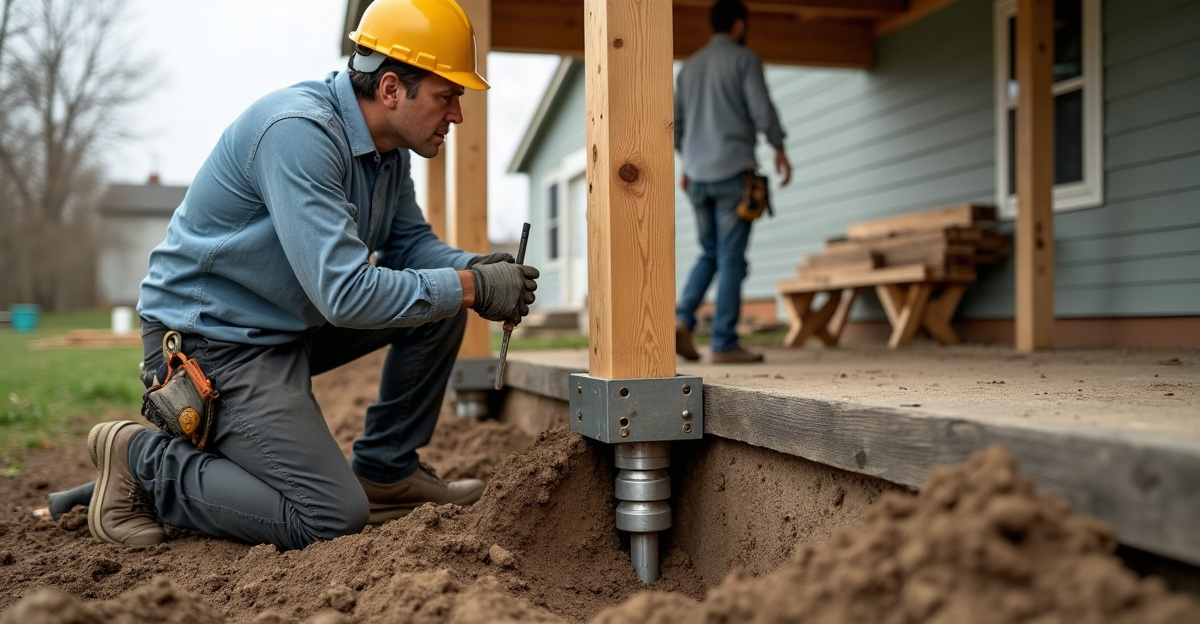
Helical piers are steel shafts with spiral plates welded near the tip. We mechanically drive them into the ground using specialized equipment.
As we install each pier, we monitor the installation torque. Torque correlates with resistance in the soil, which confirms load capacity. That gives us measurable data during installation rather than relying only on soil assumptions.
Excavation is minimal. We expose the footing area, position our equipment, and advance the pier vertically or at a specified angle. Once it reaches the required depth and torque, we attach a bracket and transfer the structure’s weight onto the pier.
In many cases, the pier can handle load immediately. There’s no waiting on concrete to cure. That speeds up deck projects, additions, and repairs.
The process is clean. We don’t create large spoil piles or remove significant amounts of soil. Landscaping disturbance stays limited to the work zone.
In cold climates like ours, properly specified galvanized steel resists corrosion and provides long-term durability. When installed correctly, these systems hold up well against freeze–thaw conditions.
For professional installation and load verification, working with an experienced helical pier contractor matters. Equipment, training, and soil knowledge all affect performance. Our approach to helical pier installation focuses on depth, torque confirmation, and clean load transfer.
Helical Piers vs. Concrete Footings: Choosing the Right Foundation Support Solution
Concrete footings remain a solid option in stable, well-drained soils with proper depth and compaction. When the native soil supports the load and frost depth is manageable, concrete performs reliably.
Helical piers become the preferred foundation support solution in unstable soil conditions, deep frost concerns, or structural repair scenarios. They bypass weak upper soils and transfer loads deeper.
Time plays a role. Concrete requires excavation, forming, pouring, and curing. Weather can delay the schedule. Helical piers can often be installed and built on the same day, keeping projects on track.
Inspection and documentation differ as well. With helical systems, torque measurements during installation provide confirmation of load capacity. That real-time verification adds confidence.
Cost should be evaluated over the long term. Upfront pricing may vary, but performance and avoidance of future repairs matter just as much. A cheaper footing that settles years later isn’t a savings.
We don’t treat helical piers as the answer to every foundation issue. The right system depends on soil, structure size, frost exposure, drainage, and access. Matching the method to the site delivers the best results.
What to Expect During Installation and Next Steps
For a typical residential deck, addition, or localized repair, installation often takes one to two days. Larger foundation stabilization projects may take longer depending on the number of piers.
Disturbance to the yard stays limited to the immediate work areas. We bring in compact equipment and avoid unnecessary excavation. Once installation is complete, backfill and cleanup follow quickly.
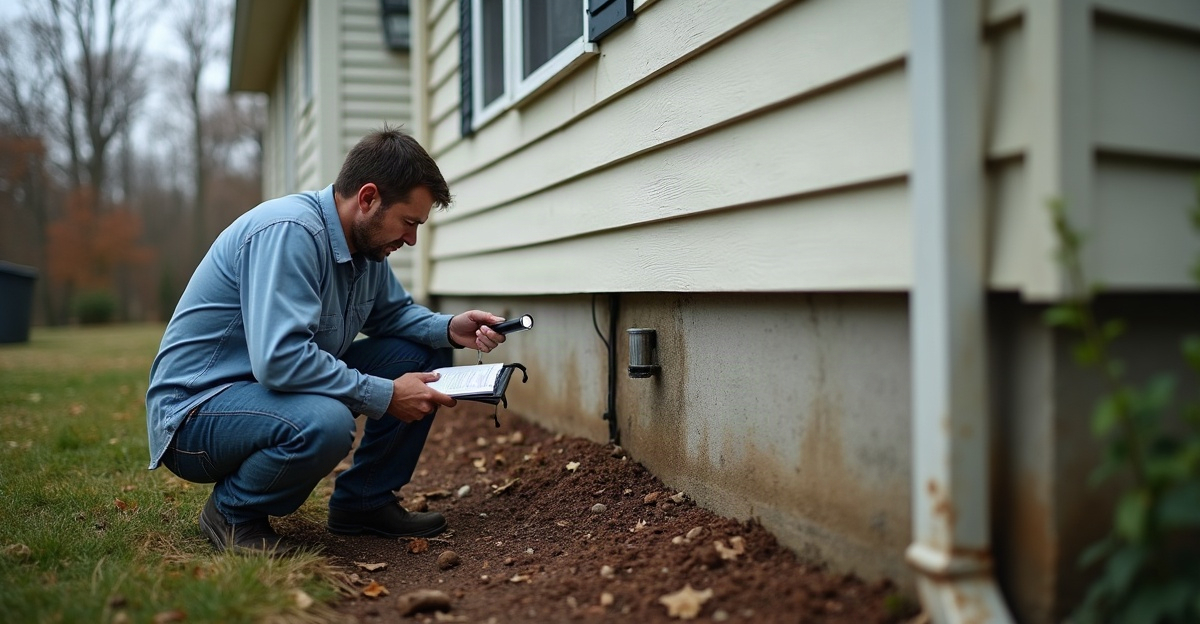
The first step is a site evaluation. We assess soil conditions, structure type, load demands, and access. That determines the depth and number of piers required. Every project differs.
In Minnesota climates, properly installed and specified helical piers provide long-term performance against frost movement and seasonal moisture shifts. Durability depends on depth, load verification, and corrosion protection.
If there’s uncertainty about soil conditions, frost depth compliance, or signs of movement, a professional evaluation helps clarify the right path. We’re direct about whether traditional footing support systems will work or if helical piers make better sense. To discuss a specific project, request a consultation through our contact page and we’ll review the site conditions and recommend the appropriate solution.