How Heavy Rain Can Cause Foundation Problems
We often find that heavy rain foundation damage develops over time. Repeated saturation, poor drainage, erosion, and wet-dry soil cycles can weaken or shift the soil beneath a structure. Rain can also raise pressure against below-grade walls, expose existing issues, and affect garages, porches, decks, slabs, and additions differently than the main home.
Key Takeaways
- We see saturated, loose, poorly compacted, and eroded soil lose bearing capacity and contribute to settlement.
- Clay soil can expand during wet periods and shrink during dry conditions, causing seasonal movement around footings and slabs.
- Poor grading, overflowing gutters, short downspouts, and incorrectly routed sump discharge can keep water near the foundation.
- Progressive cracks, sticking doors, sloping floors, soil washout, recurring moisture, and wall movement call for an on-site evaluation.
- Drainage improvements can limit future water exposure, but existing settlement may require structural support, such as helical piers.
Heavy Rain Can Change Foundation Support Conditions Over Time
Heavy rain does not usually damage a sound foundation overnight. However, repeated saturation, poor drainage, erosion, runoff, and wet-dry soil cycles can gradually change the support conditions around or beneath a structure.
A single storm may expose an existing weakness in grading, gutters, downspouts, or drainage. Ongoing rainfall, spring snowmelt, erosion, and seasonal moisture changes are often more relevant to long-term movement. Heavy rain foundation damage usually develops as water repeatedly affects the soil and drainage paths around the property.
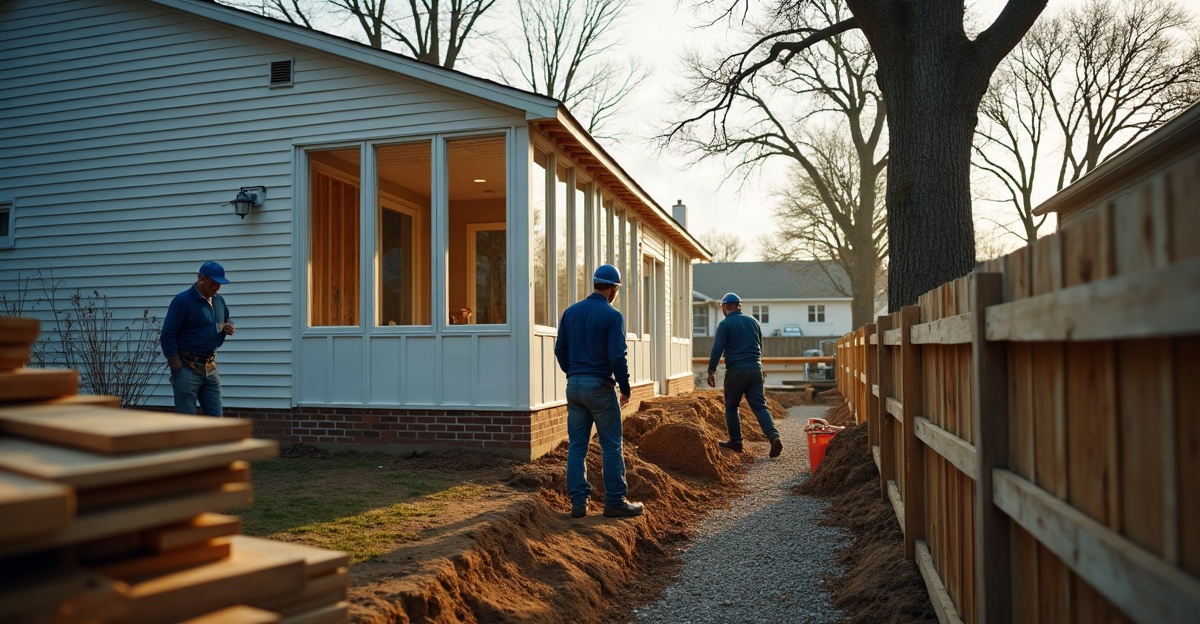
Rain-related concerns can affect more than the main foundation. Water-related foundation settlement and wet-soil movement can also affect slabs, garages, additions, porches, decks, stoops, exterior steps, and retaining areas. A settling porch or garage slab may have a different cause than movement beneath the main home, so each area needs its own assessment.
Cracks or moisture after rain do not automatically mean foundation failure. Many homes develop small cracks or occasional damp areas without structural movement. The concern increases when symptoms progress, recur, or appear alongside soil washout, sticking doors, sloping floors, or visible movement.
How Rainwater Affects Soil, Drainage, and Foundation Walls
Soil does not respond to water the same way on every property. Soil type, compaction, lot slope, drainage routes, groundwater conditions, and the volume of runoff all affect how the ground performs beneath a structure.
Clay soil can expand when wet and shrink during dry periods. That repeating change can contribute to seasonal wet-soil movement around footings, slabs, and exterior supports. Loose, poorly compacted, saturated, or eroded soil may shift or lose support. In some cases, saturated soil loses bearing capacity and can no longer carry structural loads as reliably as it did when dry and stable.
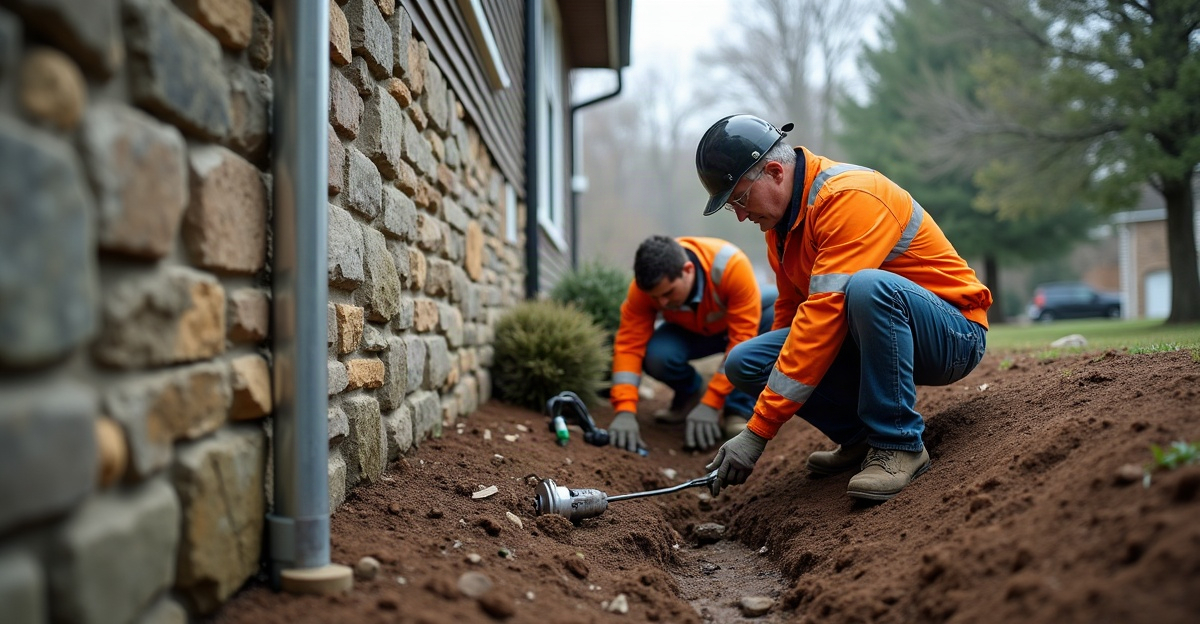
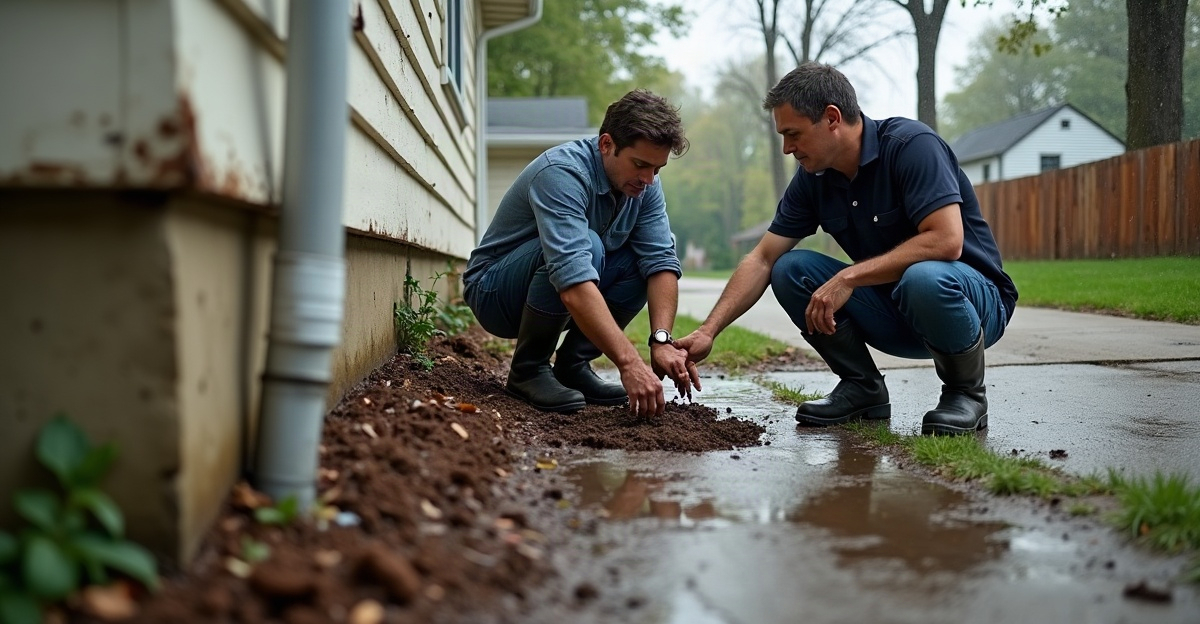
Flowing water can also carry soil away. Soil erosion near foundation edges, porch columns, deck posts, garage slabs, retaining areas, and exterior steps deserves attention. Even a small washout can grow if runoff follows the same path through several storms.
Standing water creates a separate concern. Water collecting beside below-grade walls can increase hydrostatic pressure against the foundation. That pressure can contribute to moisture intrusion through cracks, joints, penetrations, and weaker areas of a basement or crawl space. Our guidance on foundation drainage problems explains why controlling runoff matters before it reaches the wall.
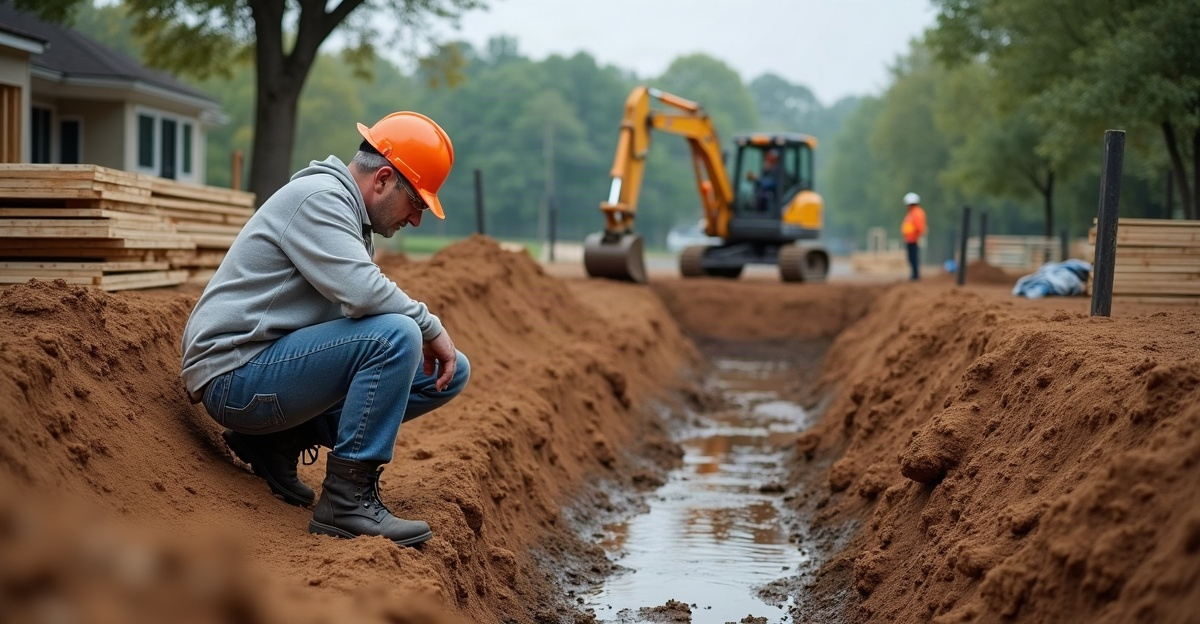
Common site conditions that increase water exposure include poor grading that directs water into the home, overflowing gutters, short downspouts, and sump-pump discharge that returns water beside the structure. Ponding near a garage, addition, deck, or porch can also keep support soils wet longer than intended.
In Bloomington and across the Twin Cities, spring snowmelt can saturate the ground before seasonal rains arrive. Freeze-thaw cycles can disrupt surface drainage, open gaps in soil, and worsen low spots. Clay soils and changing seasonal groundwater conditions also mean moisture-related movement can vary from one lot to the next. Understanding soil conditions and foundation stability helps identify whether water is likely contributing to the issue.
Warning Signs After Heavy Rain That Deserve Attention
One isolated symptom may have a simple explanation. Several symptoms appearing together after repeated rainfall deserve a closer look. Watch for the following conditions:
- Cracks that widen, lengthen, return after repair, or occur with other movement symptoms.
- New stair-step cracks in masonry or foundation walls.
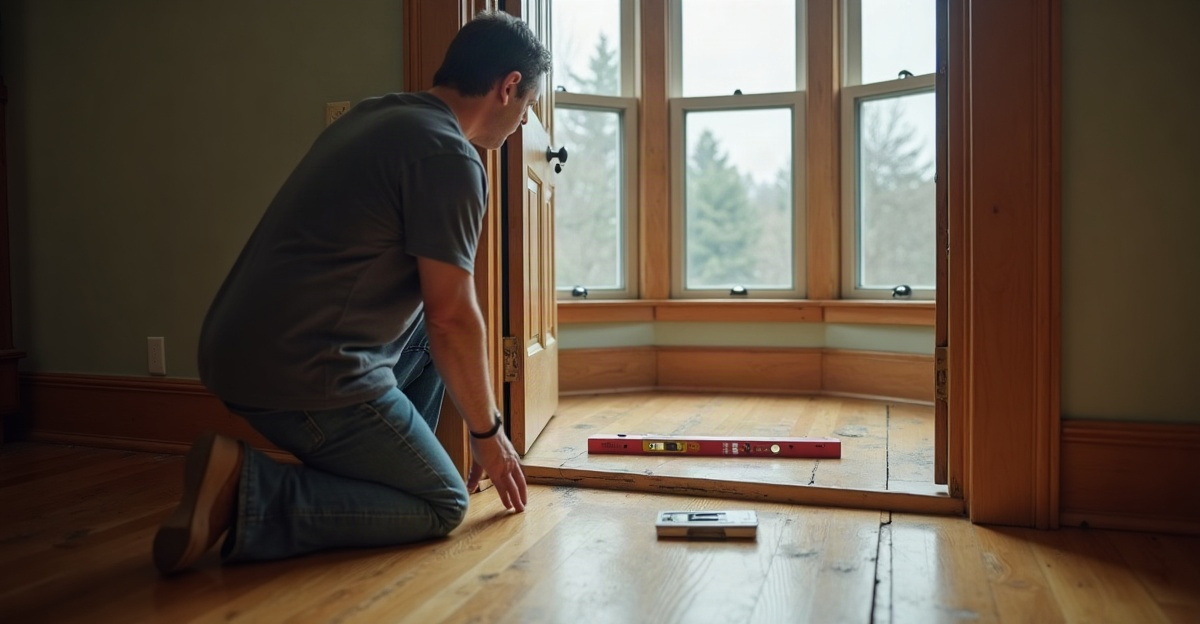
- Doors and windows that stick, bind, or no longer latch correctly.
- Uneven, sloping, or bouncy floors.
- Gaps at trim, cabinets, ceilings, exterior siding, or garage doors.
- Persistent water in a basement or crawl space.
- Soil washed away near the foundation, deck posts, porch columns, or garage slab.
- A settling porch, deck, stoop, addition, garage, or exterior steps.
- Visible wall bowing, major horizontal cracks, or sudden structural movement.
Foundation cracks after rain may appear more noticeable because wet soil expands, saturated soil shifts, and water pressure reveals conditions that were already present. Review small foundation cracks before assuming a crack is only cosmetic.
Older homes, additions, garages, decks, and structures built on variable fill can have different vulnerabilities. A deck post may settle because of localized washout while the main home remains stable. On the other hand, widespread cracks and floor changes can point to broader water-related foundation settlement.
What Can Be Monitored and What Should Be Evaluated
Small, stable hairline cracks can occur for many reasons. Concrete shrinkage, minor seasonal changes, and normal material movement do not automatically indicate structural failure. An isolated damp area after a hard storm may point to a drainage or waterproofing issue rather than settlement.
It is reasonable to monitor concerns that appear stable and limited. Take clear photos, record the date, and note crack length and width. Marking the ends of a crack or comparing photos over several months can help show whether active foundation movement is occurring.
Professional review makes sense when cracks progress, water returns after rain, soil visibly washes away, or a structure appears to move. Multiple symptoms carry more weight than one small crack or damp area. A foundation inspection after heavy rain can identify whether the issue is primarily cosmetic, drainage-related, or structural.
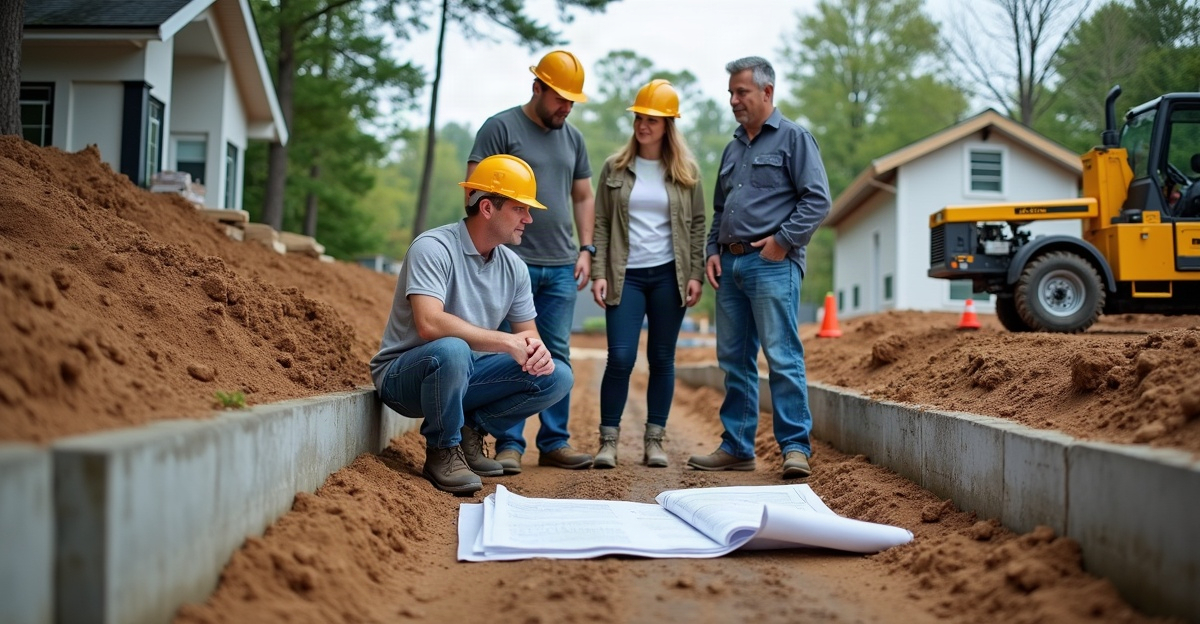
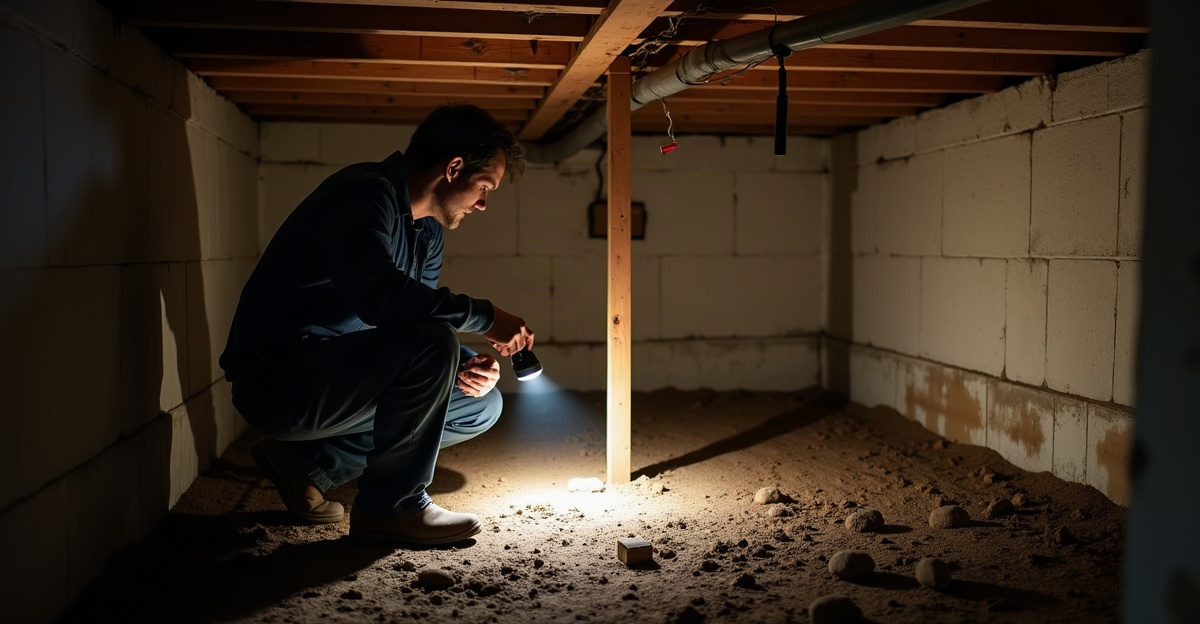
During an on-site review, qualified professionals may assess crack patterns, grading, gutter and downspout discharge, surface drainage paths, erosion evidence, footing conditions, soil behavior, structural loads, and signs of historic versus active movement. A foundation contractor, geotechnical professional, or structural engineer can then recommend the appropriate next step.
Drainage Improvements That Can Reduce Future Water Exposure
Good drainage reduces unnecessary water exposure around foundations and exterior supports. Start with practical maintenance and site corrections before assuming every water issue needs structural repair.
Keep gutters clean and flowing. Extend or direct downspouts away from the foundation where the lot allows water to drain safely without returning to the structure. Proper downspout discharge from foundation areas should follow the natural drainage path of the property, not simply move water a short distance across a flat or poorly graded surface.
Check that soil slopes away from the home. Address low spots, ponding, exposed soil, and obvious erosion promptly. Keep sump-pump discharge away from the structure, and avoid routing water into areas where it can recirculate beside the foundation. Large amounts of fill placed against siding can trap moisture and block intended drainage paths.
These steps can help improve foundation drainage and prevent water-related foundation settlement. They are not a universal cure. Drainage work may not reverse existing settlement, restore lost bearing capacity, correct shallow or inadequate footings, or stabilize a structure that needs more support.
For ongoing moisture concerns, information on protecting foundations from excess moisture offers useful maintenance direction. If movement is already present, foundation repair and stabilization services can address support concerns after proper evaluation.
When Foundation Support and Helical Piers May Be Considered
Helical piers for foundation settlement may be considered when a footing, foundation wall, porch, addition, garage, deck, or similar structure needs its load transferred to more reliable load-bearing soil. Piers are installed based on the structure, loads, access, soil conditions, engineering requirements, and confirmed cause of movement.
Helical piers do not solve every wet-soil or rain-related problem. Water-management issues still need correction alongside a structural support plan. Without drainage improvements, the property may continue to experience soil erosion, ponding, moisture intrusion, and wet-soil movement around unprotected areas.
One heavy rainstorm can expose an existing weakness, but repeated saturation and poor drainage usually play a larger role in movement over time. Foundation cracks can seem worse after rain because wet soil expands, saturated soils shift or lose support, and hydrostatic pressure makes existing wall conditions more visible.
Saturated soil can contribute to settlement where it is loose, poorly compacted, eroded, or unable to provide reliable support. The right downspout distance depends on grading, drainage paths, lot conditions, and where water can drain safely. Fixing drainage may reduce future moisture stress, but it may not correct settlement or restore structural support already lost.
When support needs to transfer to dependable bearing soil, helical pier installation can provide a direct foundation support solution. Property owners seeing progressive cracks, washed-out soil, settling exterior structures, recurring ponding, or other signs of movement should schedule an on-site evaluation rather than relying on a remote diagnosis.