Why Builders Choose Helical Piers for New Construction?
Builders choose helical piers for new construction because they deliver immediate load-bearing capacity, confirm capacity with torque readings, and provide frost-stable support in Minnesota’s clay and freeze-prone soils. We transfer structural loads below the frost line and bypass weak surface layers. That approach keeps schedules on track, limits weather delays, and delivers steady performance on tight or demanding job sites.
Key Takeaways
- Helical piers transfer structural loads below frost depth, which reduces the risk of heave and settlement in expansive clay soils.
- Same-day load-bearing capacity lets us start framing right away without waiting for concrete to cure.
- Real-time torque monitoring verifies capacity during installation and streamlines engineering approval and inspections.
- Minimal excavation and compact equipment make these piers a strong choice for tight-access lots, remodels, and infill projects.
- Upfront costs can run higher, yet fewer delays, limited soil correction, and faster timelines often balance total project costs.
Helical Piers Provide Immediate, Frost-Stable Support for Modern Builds
Helical piers for new construction give builders a fast way to create frost-proven foundation support in Minnesota’s challenging soils. They transfer structural loads deep into stable soil layers below the frost line, where seasonal movement has far less impact.
That matters in areas like Bloomington and surrounding communities, where frost depth and expansive clay can cause traditional surface-supported foundations to shift. By installing piers below frost influence, we reduce the risk of heave and settlement from the start.
One major advantage is same-day load-bearing capacity. There’s no waiting for concrete to cure. In many projects, framing begins immediately after installation. That keeps schedules tight and eliminates downtime between trades.
Installation depth depends on soil conditions. We advance each pier until it reaches suitable bearing strata below frost depth. In clay soils or poorly compacted fill, that often means bypassing unstable upper layers entirely.
During installation, torque monitoring verifies load-bearing capacity in real time. This data supports engineering approval and simplifies inspections. Instead of estimating, we measure resistance as the pier advances and document the results.
Builders across Bloomington use helical piers for new construction on decks, additions, garages, porches, and small homes. They’re one of several reliable foundation systems for homes, but in frost-prone soils they often provide a cleaner, more predictable path forward.
To better understand the system itself, we explain the basics in what helical piers are and how they work.
How Helical Piers Work on a Minnesota Job Site
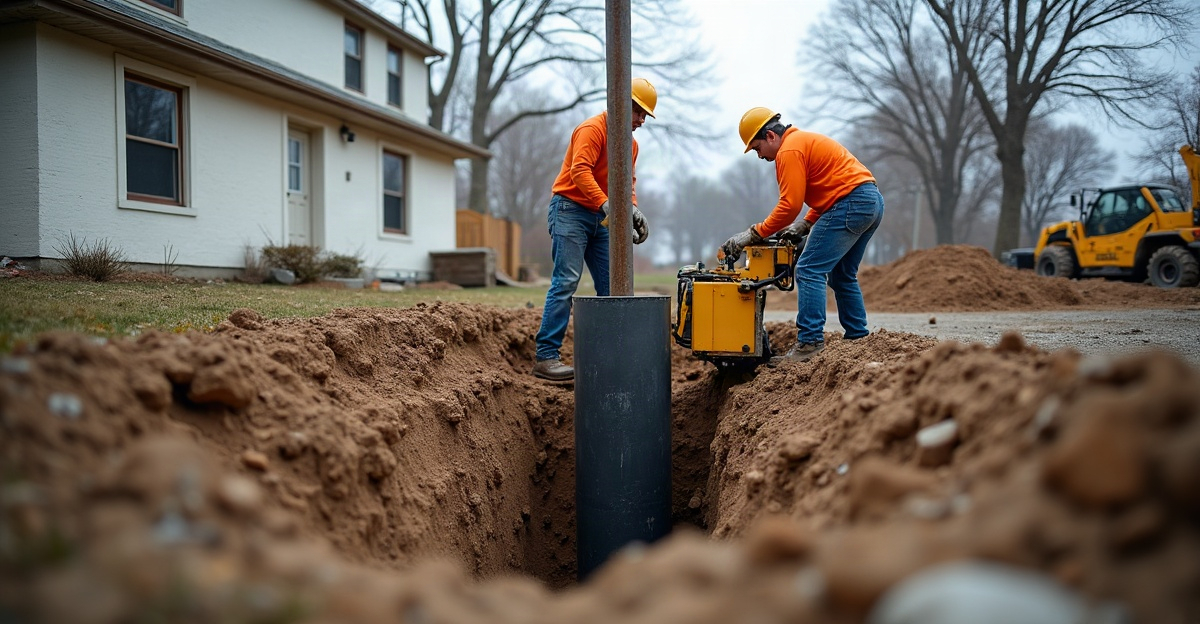
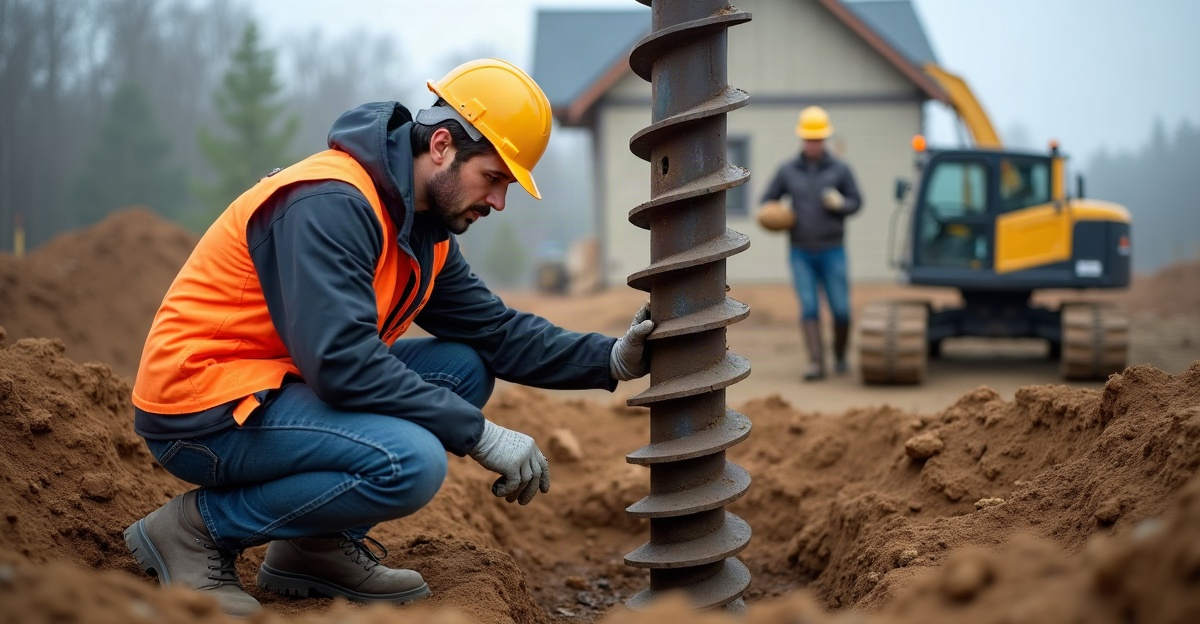
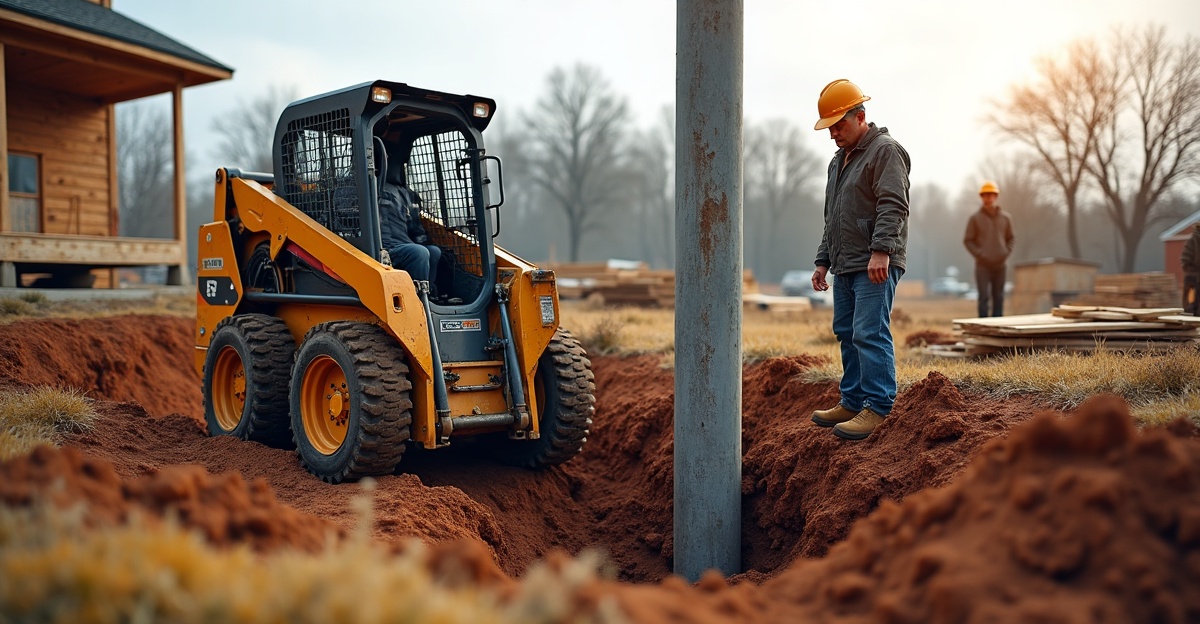
On a typical job site, we use steel shafts with one or more helical plates welded near the tip. A compact hydraulic drive head, mounted on a skid steer or similar equipment, rotates the pier into the ground. This setup works well on tight access lots and established neighborhoods.
Excavation is minimal compared to traditional footings. We remove only what’s needed to install brackets or caps. There’s no large trenching, no forming, and no stockpiling of spoil piles across the yard.
As the pier advances, the helices cut into the soil and anchor into denser layers. The structure’s weight is then supported through load transfer to stable soil layers below frost line. This approach bypasses weak surface soils that often cause settlement in Minnesota builds.
Winter conditions are another reason builders rely on this system. Frozen ground and low temperatures complicate concrete placement. Helical piers install year-round with fewer weather restrictions.
Limited soil disturbance also protects finished landscaping and nearby structures. On remodels or infill lots, that efficiency makes a noticeable difference in overall project flow.
For projects where ground support is needed quickly and cleanly, we provide professional helical pier installation throughout the region.
Comparing Helical Piers to Traditional Concrete Footings
Choosing between systems depends on soil, schedule, and structure type. Both helical piers and traditional concrete footings have a place in new construction footing support.
Concrete footings follow a familiar sequence:
- Excavate.
- Form.
- Reinforce.
- Inspect.
- Pour.
- Wait for cure time.
Weather can delay each step. Cold temperatures require blankets or additives. Excess moisture may postpone pours.
Helical piers streamline that process. We install with minimal excavation and no cure time. Once torque confirms capacity, construction can proceed.
Soil conditions also influence the choice. Traditional concrete footings rely heavily on properly compacted surface soils. If upper soils are soft, clay-heavy, or questionable fill, additional excavation and soil correction may be necessary.
Helical piers bypass weak zones. By extending into deeper bearing strata, they reduce reliance on surface compaction.
That said, traditional concrete footings remain appropriate in some cases. Full basements or sites with stable, well-compacted granular soils often perform well with conventional design. The goal isn’t to claim universal superiority. The goal is selecting practical builder foundation solutions for the conditions at hand.
We break down the differences in more detail in helical piers vs concrete footings, including where each system makes the most sense.
When Helical Piers Make the Most Sense in Minnesota
Certain site conditions consistently point builders toward helical piers for new construction. Minnesota soils vary block by block, especially within 100 miles of Bloomington.
Helical piers are particularly effective in:
- Expansive clay and poorly compacted fill.
- Shifting or frost-prone soils.
- Tight access lots in established neighborhoods.
- Fast-track construction schedules.
- Winter installations.
We frequently install piers for decks, garage foundations, home additions, porches, and small homes built on challenging lots. For example, our garage foundation support projects often benefit from deep load transfer where prior fill or frost movement is a concern. The same applies to deck footing support when we want to prevent seasonal shifting.
Builders choose this system for predictable timelines and reduced risk of frost heave. When selecting between foundation systems for homes, soil behavior and frost depth often drive the decision more than anything else.
Additional guidance on timing and conditions is covered in when to use helical piers for a foundation.
Cost and Timeline Considerations Builders Actually Weigh
Upfront cost per pier can be higher than basic concrete footings. That’s a fair point and part of real cost considerations on any build.
However, we also account for reduced excavation, less concrete material and labor, minimal soil remediation, and fewer weather-related delays. Those factors often offset initial pricing differences, especially on difficult sites.
Timelines are where helical piers stand out. In many cases, we install and the framing crew starts the same day. Concrete typically requires inspection scheduling, pouring, and cure time before significant loads are applied. Each step adds coordination and potential delay.
Inspection considerations in Minnesota municipalities also favor helical systems in many projects. We document torque readings during installation. Those readings support engineering approval and demonstrate verified capacity before the structure is built. Inspectors see measured resistance instead of assuming performance based on soil at shallow depth.
Longevity is another common concern. Modern piers use coated or galvanized steel options for corrosion protection. Properly specified and installed, they deliver long-term performance that aligns with the life of the structure.
Structural capacity is verified as we install. We don’t guess at bearing strength. We measure it in real time and record it.
For additions in particular, we work through detailed foundation support for additions plans that align load requirements, soil data, and timeline goals.
Are Helical Piers the Right Foundation Solution for Your Project?
Helical piers for new construction fit many Minnesota builds, but they aren’t a universal replacement for every system. Choosing the right builder foundation solutions starts with clear answers to a few practical questions.
We evaluate:
- Soil conditions – Are we dealing with clay, fill, or significant frost depth concerns?
- Load requirements – What will the structure weigh now and in the future?
- Schedule – Is the project on a tight timeline?
- Access – Is the lot narrow or already developed?
- Inspection needs – Do we require fast, documented load verification?
If soils are stable and the project includes a full basement, conventional footing systems may still make sense. If ground conditions are questionable or the timeline is tight, helical systems often provide more certainty.
Experience matters. The right choice matches soil behavior, structure type, and construction schedule. That’s how we approach foundation systems for homes across the Bloomington area.
For builders and property owners discussing plans, we recommend reviewing site conditions early. We’re always available through our contact page to talk through soil conditions, engineering requirements, and project timelines before work begins.