Helical Piers for Deck Foundations: What to Know?
Helical piers for decks give us a deep foundation option that stands up to Minnesota’s frost depth, harsh freeze-thaw cycles, and variable soils that often shift or settle traditional footings. We mechanically drive steel piers below active soil layers and verify capacity through torque monitoring during installation. This approach creates stable, code-compliant deck support with minimal excavation and immediate load capacity.
Key Takeaways
- Minnesota’s frost depth and expansive soils make shallow or poorly installed footings a frequent cause of deck movement and structural issues.
- Helical piers transfer deck loads to stable soil below frost depth and use torque monitoring to confirm load capacity during installation.
- Installation requires minimal excavation, creates less yard disruption, and lets us start framing immediately without waiting for concrete to cure.
- Helical piers work especially well in weak soils, tight access sites, winter installations, and replacement decks with failed concrete footings.
- Traditional concrete footings can still perform well in stable soils with straightforward load demands and flexible project schedules.
Why Proper Deck Foundation Support Matters in Minnesota
Deck foundation support determines whether a deck stays level for decades or starts shifting after a few seasons. Structural movement almost always traces back to what’s happening below the surface. Good framing can’t compensate for weak soil or shallow footings.
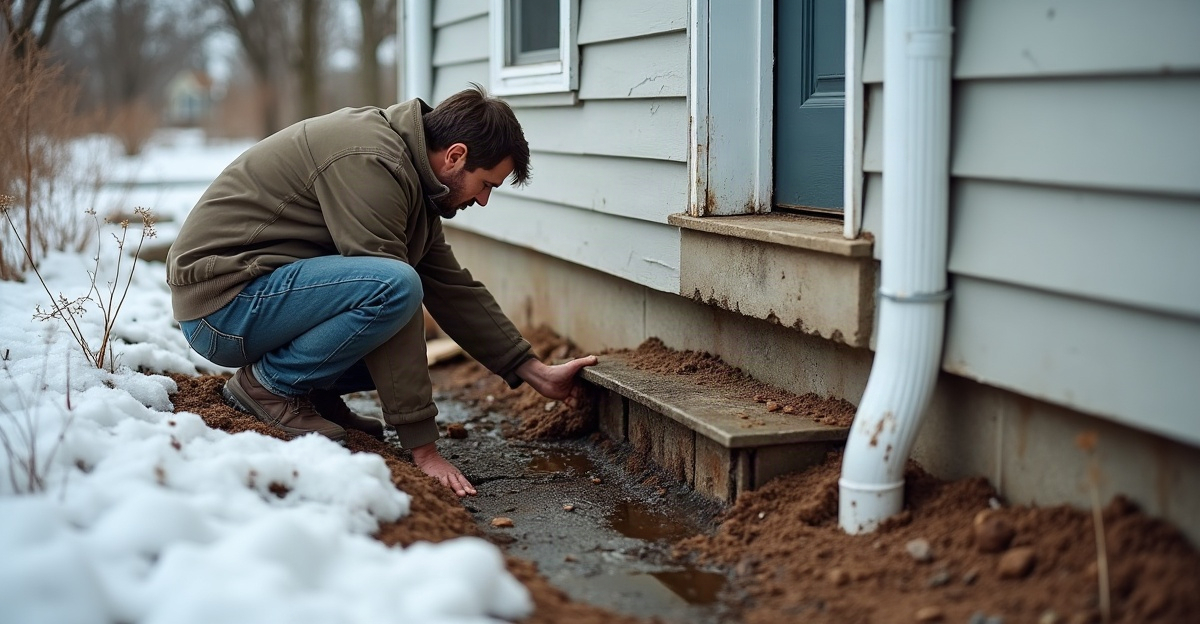
In Minnesota, frost depth commonly reaches 60 inches or more. That frost depth in Minnesota creates a serious risk of frost heave if footings don’t extend far enough below grade. Freeze-thaw cycles expand and contract soil throughout the year. Expansive soils and variable soil conditions around Bloomington make soil movement a long-term concern, not a one-time event.
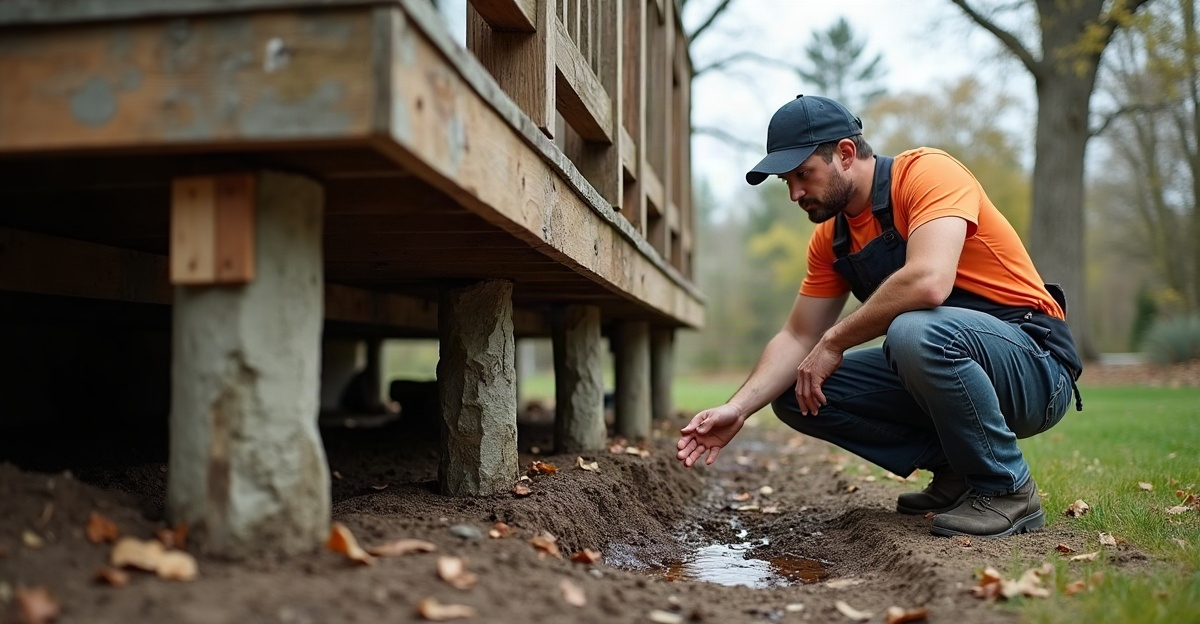
Shallow or improperly sized foundations often lead to uneven decks, stuck doors at ledger connections, cracked framing joints, and loose railings. We’ve seen decks pull away from homes or settle at one corner because load requirements weren’t properly considered. Every deck must account for:
- The weight of framing and decking materials
- Snow loads common in Minnesota winters
- Guardrails and stair systems
- Concentrated loads like hot tubs or screened enclosures
Proper deck foundation support transfers weight to stable soil below the frost line instead of relying on soft, surface-level bearing soils. When we anchor into stable layers at depth, we reduce the risk of long-term settlement and movement caused by frost heave and changing soil conditions.
What Helical Piers for Decks Are and How They Work
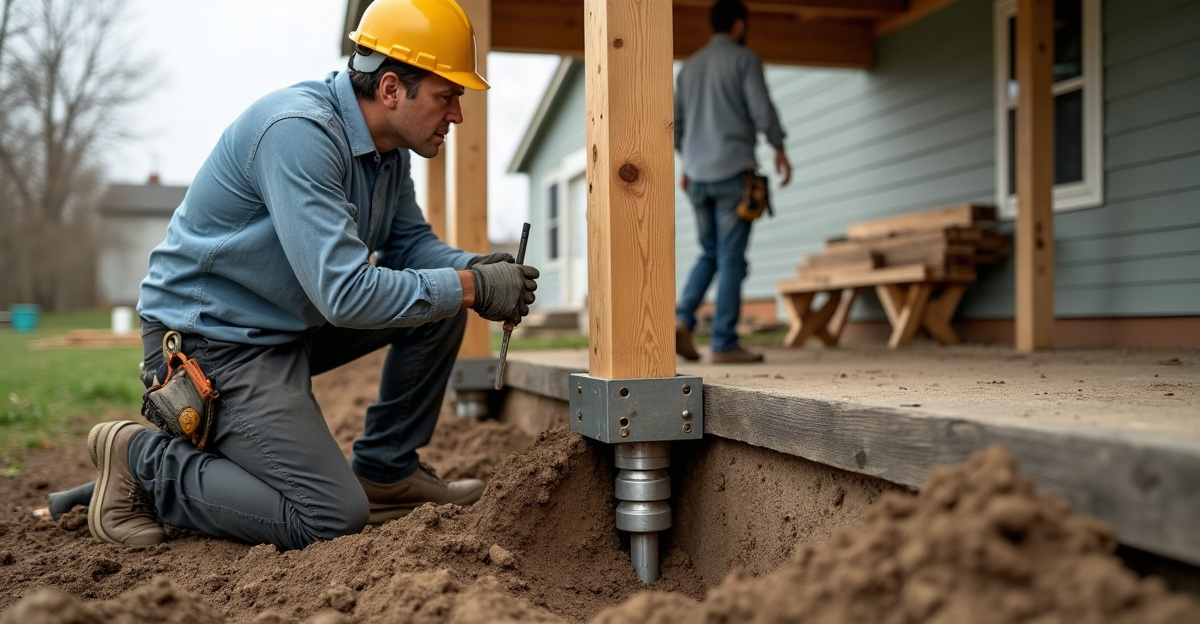
Helical piers for decks are steel foundation elements made with a central steel shaft and one or more helix plates welded near the bottom. The helix plates act like threads on a screw. As the pier rotates, it pulls itself into the ground.
Instead of sitting on a wide concrete pad near the surface, helical piers advance deep into the soil. As they move downward, the helix plates create load transfer to stable soil below frost depth. This method allows us to bypass weak upper layers that are prone to frost heave and seasonal movement.
During installation, we rely on torque monitoring. As resistance increases, torque readings rise. Those readings directly correlate to load capacity. That means we’re verifying performance during installation rather than guessing based only on depth. Once we reach the required torque, we know the pier can support the deck’s load requirements.
After installation, we attach a steel bracket to connect the pier to the deck posts or beams. The result is a secure system engineered for long-term deck foundation support. For a deeper technical overview of components and function, we explain more in our guide on what are helical piers and how they work.
How Deck Pier Installation Works (Step-by-Step Overview)
Deck pier installation is straightforward and efficient when handled by experienced crews. Compared to traditional methods, the process requires minimal excavation and far less disruption.
Here’s what typically happens:
On-Site Installation Process
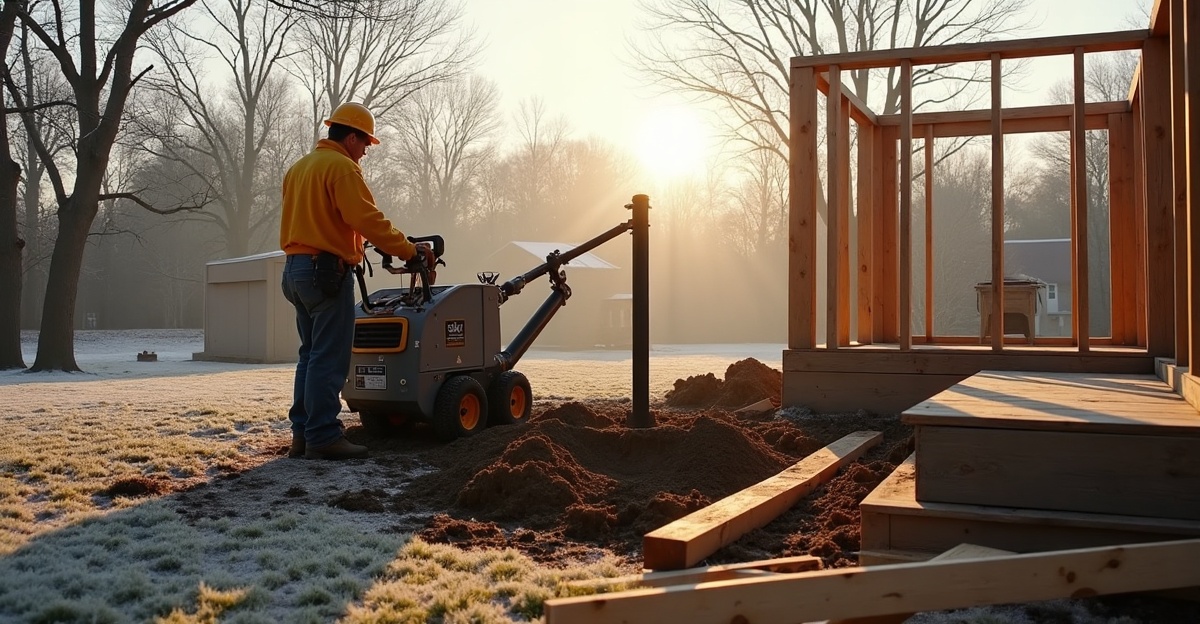
We position compact equipment at each pier location. A hydraulic drive head rotates the pier into the soil. There’s no need for large open holes or spoil piles scattered across the yard.
As the pier advances, we monitor torque in real time. We don’t rely solely on reaching a specific depth. Instead, torque confirms when immediate load capacity meets engineered requirements.
Helical piers work well in tight access sites where skid steers or large augers can’t reach. That makes them practical for backyard projects with fencing, landscaping, or limited entry paths.
Because there’s no concrete pour, there’s no cure time. Brackets can accept load immediately after installation. Deck framing can start right away, helping maintain fast installation timelines.
Local permitting and inspections typically verify depth, torque, and bracket attachment. Inspectors focus on measurable performance data rather than just hole size or concrete form depth.
This system is especially effective for replacement decks where old concrete footings have failed. Instead of tearing apart large sections of yard, we can install new piers alongside existing structures and re-establish stable support.
For more detail on preventing deck movement, we cover related issues in deck footing support prevents structural problems. If we’re evaluating a current project, our deck footing support services outline how we approach both new builds and repairs.
Helical Piers vs. Concrete Footings: Practical Comparison
Helical piers and traditional concrete footings both serve as deck footing alternatives. The right choice depends on soil conditions, frost depth requirements, access, and timeline.
Concrete footings require excavation below frost depth, often 60 inches or more in Minnesota. Contractors must dig wide holes, form the concrete, pour, and backfill. That process creates yard disruption and depends heavily on weather conditions. Cure time also affects scheduling. Framing typically pauses until concrete gains sufficient strength.
Helical piers are mechanically advanced to depth with minimal soil disturbance. There are no large spoil piles and typically no need to wait before loading. Cure time versus immediate load capacity becomes a major factor on tight schedules or in colder months.
In terms of soil performance, traditional concrete footings rely on undisturbed bearing soil at the bottom of an excavation. If upper soils are weak or variable, those footings may still be affected by settlement or frost heave. Helical piers transfer load deeper when upper soils aren’t reliable.
Both systems must extend below frost depth requirements. The difference lies in how they reach that depth. Concrete relies on large excavations. Helical piers achieve depth through mechanical advancement with torque verification.
Inspections differ as well. Concrete inspections focus on hole depth, diameter, and formwork before pouring. Helical pier inspections focus on installation depth, torque readings, and bracket attachment.
Concrete can still be appropriate for stable soils, simple low-load decks, and sites with easy excavation access and flexible timelines. We take a balanced view and evaluate each site before recommending a direction.
For a broader comparison, we break down performance differences in helical piers vs concrete footings.
When Helical Piers Make Sense for a Deck Project
Helical piers for decks solve specific problems that conventional systems struggle with. We typically recommend them in the following conditions:
- Poor soils with high settlement risk
- Sites affected by frost heave and repeated freeze-thaw cycles
- Backyards with tight access that limit excavation equipment
- Fast installation timelines where concrete cure delays framing
- Replacement decks with settled or heaved footings
- Projects requiring verified capacity through torque monitoring
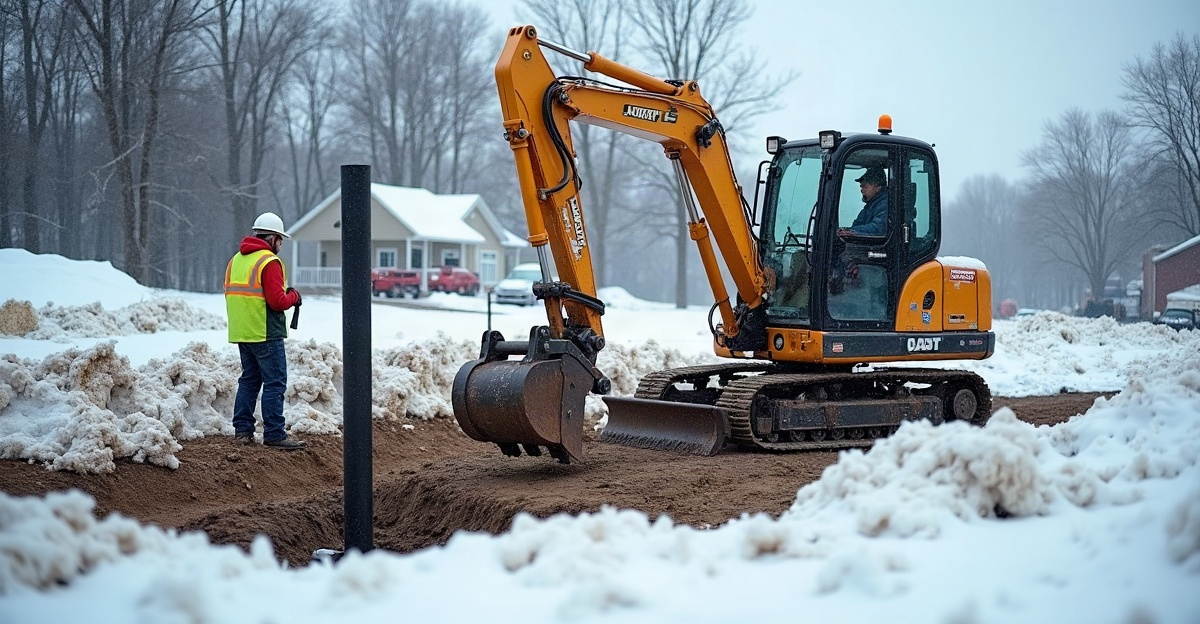
- Winter installations where digging frozen ground is impractical
In areas with unstable soils, helical piers provide reliable deck footing alternatives because they transfer load well below active surface layers. In winter, they allow work to continue even when ground conditions make large excavations difficult.
Whenever site conditions raise questions, we review soil behavior, load requirements, and long-term expectations before finalizing a plan. Our helical pier installation services focus on measurable performance rather than guesswork.
When Traditional Footings May Still Be the Right Choice
Traditional footings can perform well under the right circumstances. Stable, well-draining soils with predictable bearing capacity often support conventional excavation and poured concrete effectively.
Simple ground-level decks with modest load demands may not require deep mechanical solutions. If excavation access is easy and the project timeline is flexible, concrete remains a practical option. Cost considerations sometimes favor conventional digging and forming, especially on straightforward sites.
Local code requirements also influence the decision. Some municipalities specify footing dimensions or inspection procedures that shape the approach. That’s why soil type evaluation and frost depth in Minnesota must always be part of early planning.
We evaluate:
- Soil type and consistency
- Frost depth exposure
- Structural load requirements
- Access limitations
- Permitting and inspection standards
- Long-term movement risks
No single system works for every situation. The right deck foundation support depends on real-world site conditions. We compare deck footing alternatives honestly and select the option that supports long-term performance. If a project requires a detailed evaluation, we coordinate site reviews and permitting guidance through our main office at contact us.