What Are Helical Piers And How Do They Work?
Helical piers are steel, screw-like foundation supports that we rotate into the ground to carry a structure’s weight beyond loose or frost-affected soil and into deeper, stable bearing layers. We rely on them in Minnesota for decks, additions, garages, and foundation settlement because they perform well in clay soils and deep frost conditions.
Key Takeaways
- Helical piers are steel shafts with helical plates that we mechanically rotate into the ground to anchor structures in stable soil below weak surface layers.
- We continue installation until we reach the target depth and torque, which confirms the pier has engaged competent, load-bearing soil.
- We commonly install them in Minnesota for decks, additions, garages, and settling foundations where frost depth and clay movement create risk.
- We install helical piers with minimal excavation, load them immediately, and often keep construction moving without waiting for concrete to cure.
- We base the right foundation choice on soil conditions, structural load, site access, budget, and local code requirements.
What Are Helical Piers?
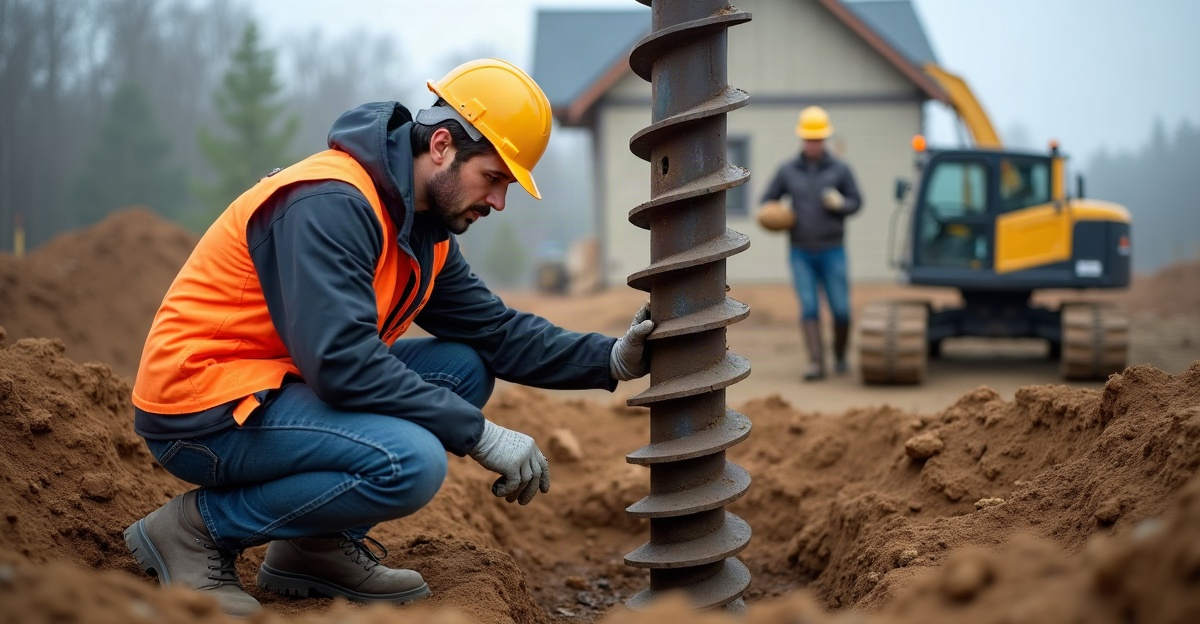
Helical piers are steel foundation supports used to stabilize and support structures. When property owners ask what are helical piers, we explain that they are steel shafts with one or more helical plates welded to the bottom, forming a shape similar to a large steel screw.
These piers, also called screw piles for foundations, are rotated into the ground instead of being set into a dug and poured concrete footing. The helical plates act like threads on a screw. As we install them, they pull the pier into the soil and help it grip stable ground below.
Their core function is simple. A helical pier system transfers the weight of a structure—home, deck, garage, porch, or addition—down into deeper, load-bearing soil. If upper soil layers are loose, wet, or prone to shifting, the piers bypass those layers and anchor the load where the soil is stronger.
Across Minnesota, we use helical piers for:
- Decks with deep frost requirements
- Home additions that need solid support
- Detached garages on soft soil
- Sinking porches or settled foundations
They are an alternative to traditional concrete footings. They are not automatically better in every situation. In many Minnesota soil conditions, though—especially with frost depth and clay movement—they are often the better fit.
How Helical Piers Work to Support a Structure
Understanding how helical piers work starts with their two main components: the steel shaft and the helical plates. The shaft carries the structural load. The plates act as bearing surfaces that engage and grip the soil.
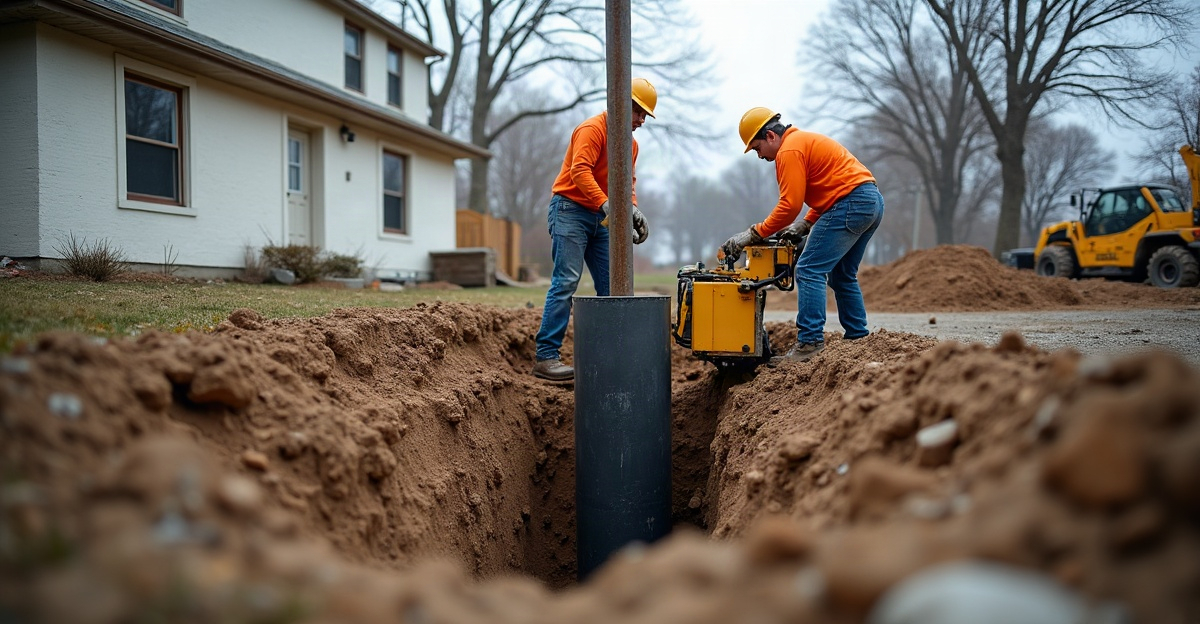
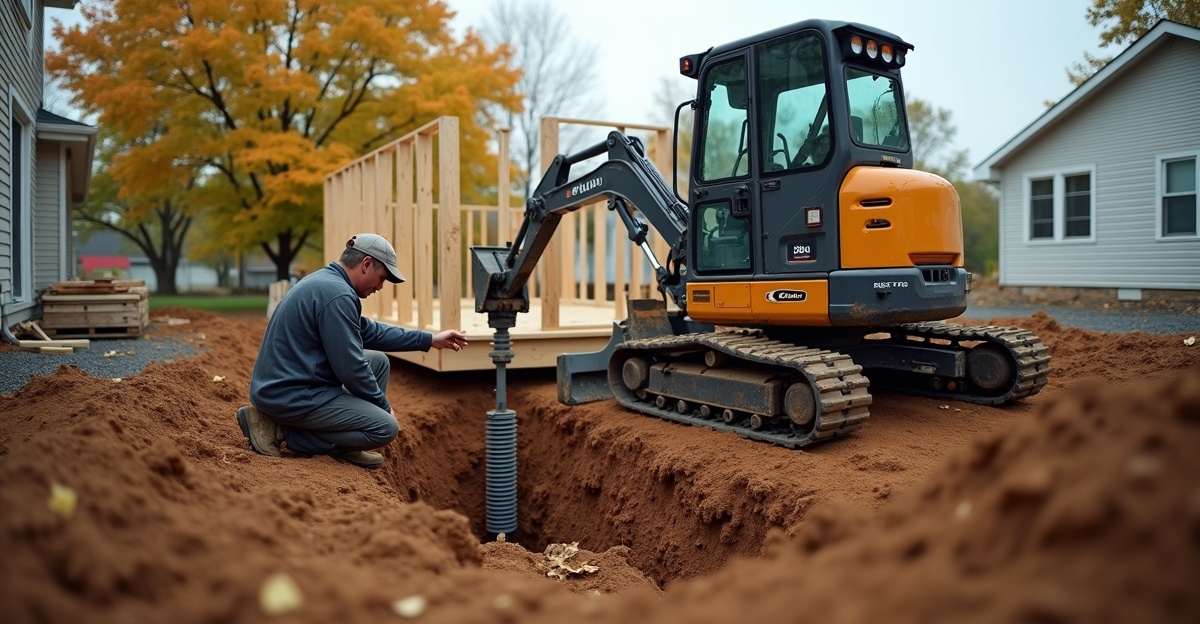
We install helical piers using hydraulic equipment mounted on a skid steer or mini-excavator. The machine rotates the pier into the ground with steady downward pressure. As the pier advances, the plates pull it deeper, similar to driving a screw into wood.
Installation continues until the pier reaches competent, load-bearing strata. In plain terms, we keep going until we hit soil that is dense and stable enough to support the structure. That often means going below loose topsoil, fill material, or soft clay layers.
As the pier moves into stronger soil, resistance increases. We measure this resistance as installation torque. Higher torque indicates stronger soil engagement. This gives us a way to verify that the pier has reached the capacity needed to support the structure.
Once installed, the weight of the structure transfers through the bracket, into the steel shaft, down to the helical plates, and into stable soil below. In Minnesota, that often means extending below frost depth and below soil affected by seasonal moisture changes and freeze-thaw cycles.
Where Helical Piers Are Commonly Recommended in Minnesota
We recommend a helical pier system in specific situations where soil or site conditions create risk for traditional footings.
Common applications include:
- Fast deck footings in areas with deep frost depth
- Additions where large excavation for concrete is difficult or disruptive
- Garages built on soft, wet, or expansive clay soil
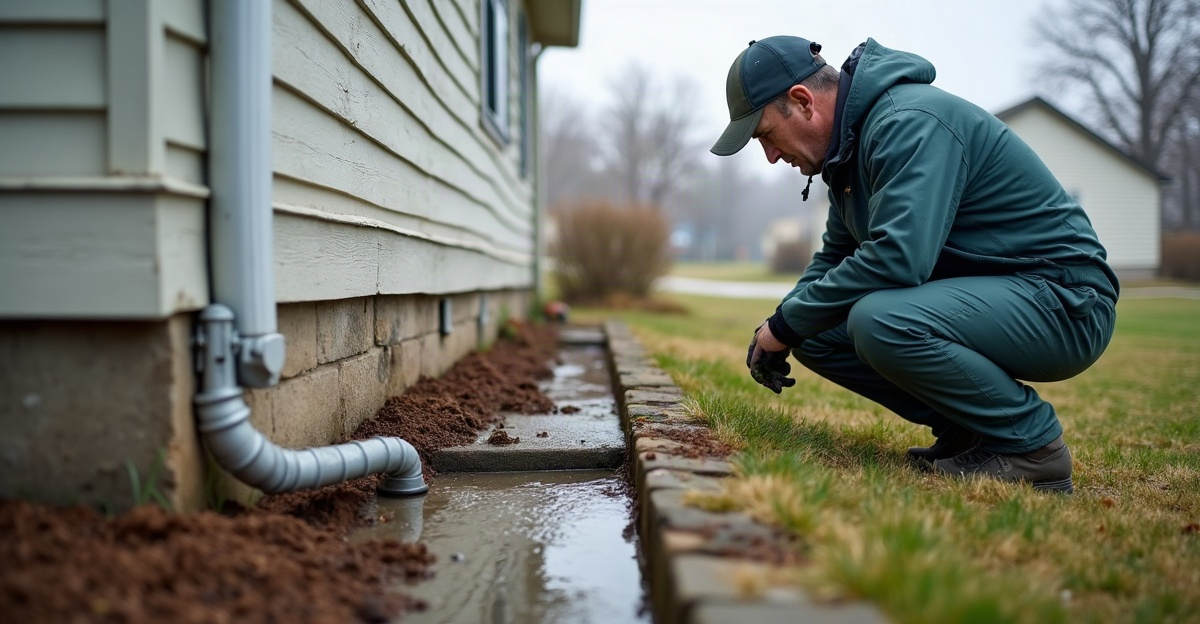
- Foundation settlement repair and sinking porches
- Projects with tight access or limited yard space
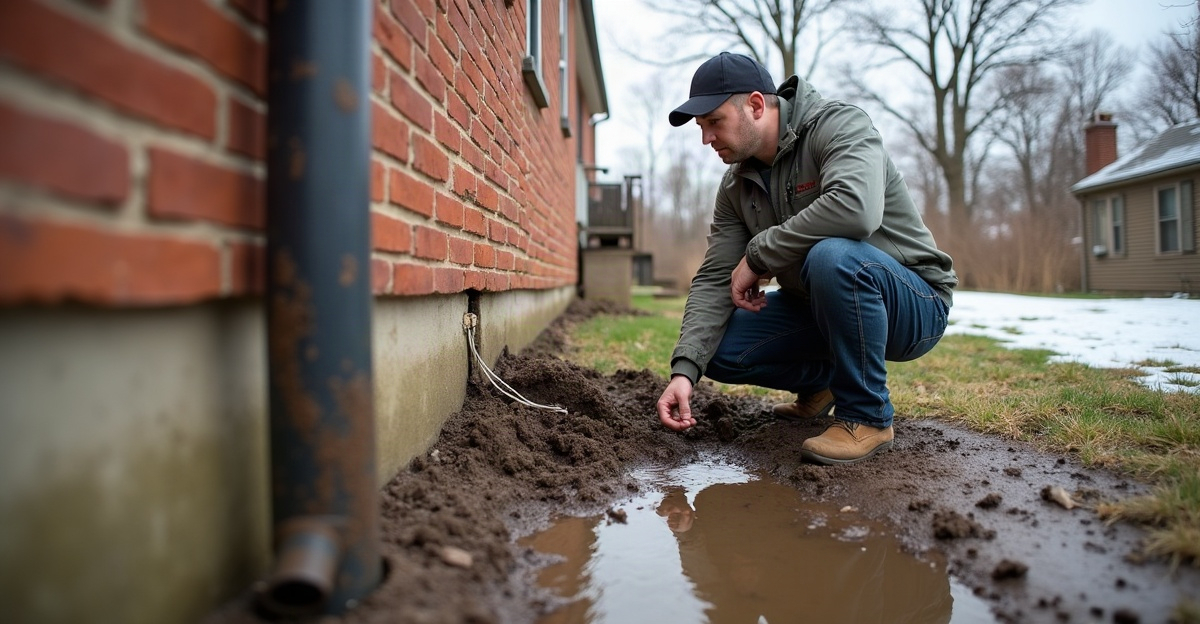
Minnesota soil and climate play a major role in that decision. Frost heave can push shallow footings upward. Expansive clay soils swell when wet and shrink when dry. Spring conditions often leave sites saturated. Frost depth here is also much deeper than in warmer states, requiring deeper support.
Helical piers allow us to extend support well below frost depth and problematic surface soils.
Traditional concrete footings still make sense in some cases. Stable, well-drained soil with minimal movement may perform well with properly sized concrete. Full basements or crawl spaces often require poured concrete walls as part of the overall design. Projects that already involve full excavation may also align naturally with conventional footings.
The right foundation depends on soil conditions, structure weight, budget, and code requirements—not a one-size-fits-all answer.
What Installation Looks Like: Timeline, Equipment, and Property Impact
Helical pier installation follows a clear process.
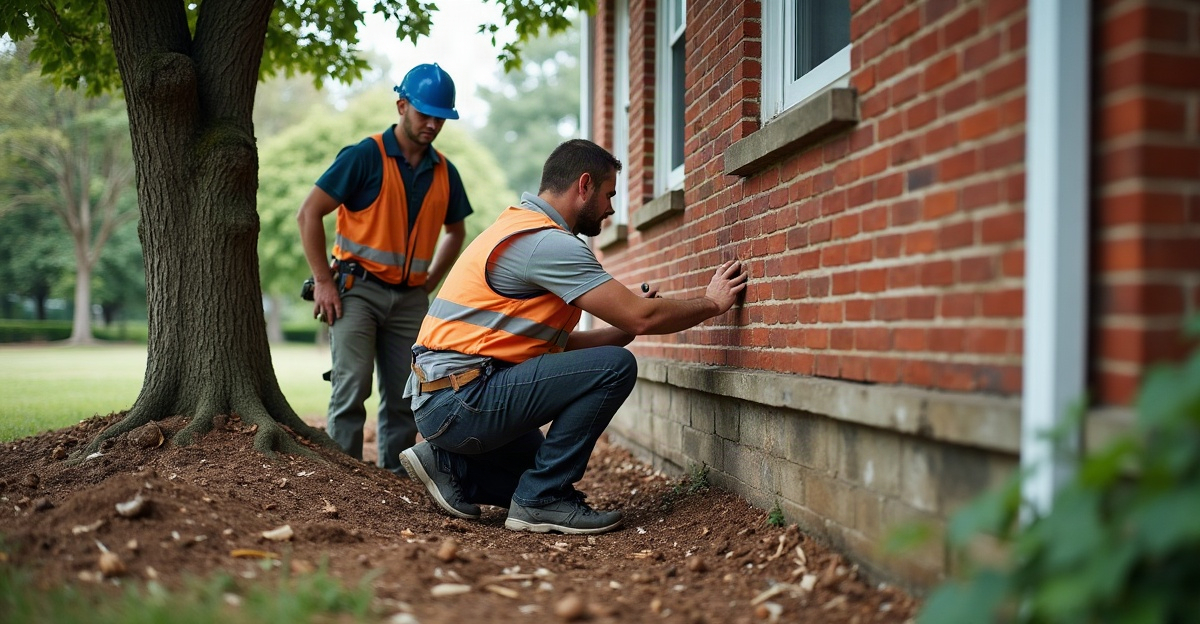
We start with site evaluation and layout. We mark each pier location based on structural plans and load requirements.
Next, we bring in a hydraulic drive head mounted on a skid steer or mini-excavator. The machine rotates each pier into the ground. We monitor depth and torque carefully. Once proper depth and target torque are reached, we stop driving.
We then attach brackets that connect the pier to the structure. For new construction, that may mean supporting beams or posts. For repairs, that may involve lifting or stabilizing an existing foundation. After installation, inspection and permit sign-off occur where required by local code.
For many decks or small additions, installation takes a single day. Since we don’t pour concrete, there’s no cure time. Construction can often continue immediately after the piers are installed.
Homeowners usually appreciate the limited disruption. We perform minimal excavation compared to large concrete footings. Yard impact stays localized to each pier location. Equipment does produce moderate noise during installation, but the process is short and controlled.
For decks, we often install deck footing support in one visit. For structural settlement, we handle stabilization through our foundation repair services. Anyone considering this foundation option can review our full helical pier installation process for more detail.
Some projects require engineering documentation, especially for larger additions or heavier structures. Permits and inspections vary by city, so we coordinate that as part of the planning stage.
Helical Piers vs. Traditional Concrete Footings: A Practical Comparison
Both systems have their place. The right choice depends on conditions and goals.
Concrete footings require larger excavation. We dig wide holes, set forms, place rebar, and pour concrete. Screw piles for foundations require minimal digging. We advance them directly into the soil with machinery.
Weather affects concrete significantly. Cold temperatures can delay pours and require protection for curing. Helical piers can often be installed in colder Minnesota conditions because we are not waiting on concrete to set.
Cure time is another difference. Concrete must cure before it can carry full structural load. Steel piers can be loaded immediately after installation.
Depth consistency also matters. With concrete, footing depth typically matches design specifications. With helical piers, we continue advancing until we reach stable strata. That allows us to extend deeper if needed based on actual soil conditions.
Cost varies by project. Helical piers often have a higher upfront per-pier cost. Reduced excavation, shorter timelines, and no cure delay can offset those costs depending on the scope of work and soil challenges.
Long term, properly installed helical piers are engineered for structural loads and long service life. Installed to appropriate depth, they are built to resist frost heave and seasonal soil movement common in Minnesota.
Common Questions About Helical Pier Systems
Helical pier systems raise practical questions. Here are direct answers based on field experience.
Are Helical Piers Permanent?
Properly installed steel piers are intended as permanent foundation elements. They are manufactured from structural steel and engineered for long-term load-bearing use. When installed to correct depth and capacity, they perform for decades as part of the structure’s foundation system.
Do Helical Piers Work in Clay Soil?
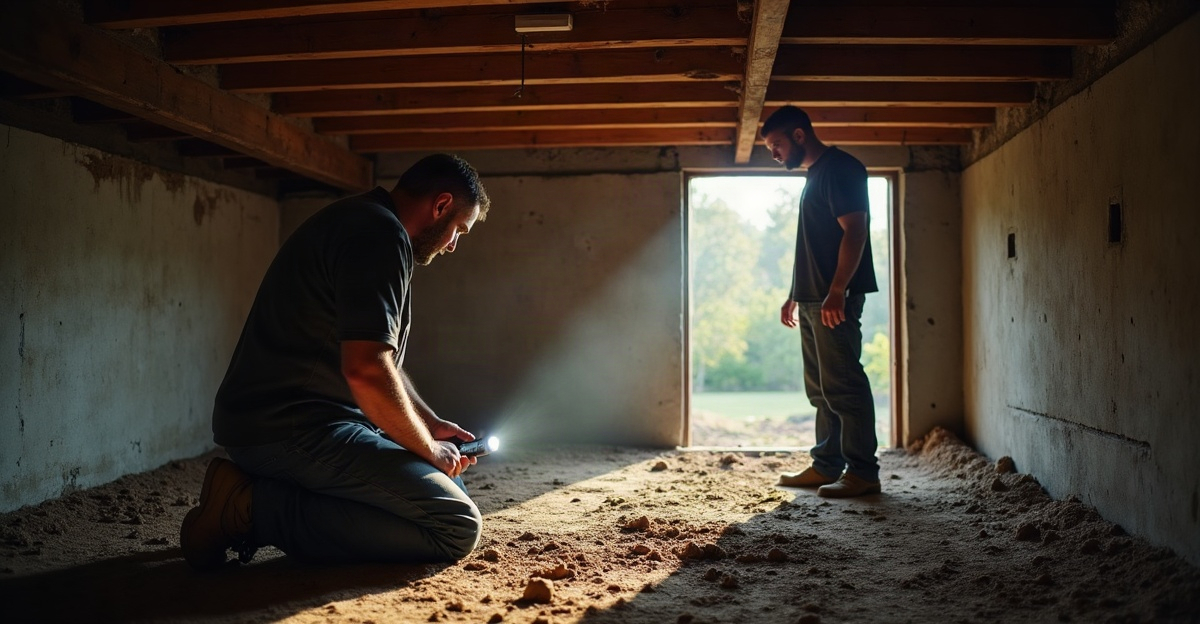
Yes. Expansive Minnesota clay can cause problems near the surface, especially with moisture changes. We install piers through those active layers and anchor them in more stable soil below. Depth and torque verification are key to success.
Other common concerns include cost, deck use, and code compliance.
Cost depends on several factors:
- Required depth to reach load-bearing soil
- Number of piers needed
- Structural load requirements
- Site access and equipment constraints
Simple deck projects may involve fewer piers and lower depth. Settlement repair or heavy additions typically require deeper installation and engineering review, which increases cost.
Screw piles are an excellent option for decks in Minnesota. They extend below frost depth, help reduce seasonal movement, and allow fast installation without waiting on concrete.
Building code compliance depends on local municipality requirements. Many cities require permits and, in some cases, engineer-signed drawings or capacity documentation. We coordinate that as part of the project planning.
The most accurate way to determine whether helical piers make sense is a site-specific evaluation. Soil conditions, structural weight, and local code all factor into the decision. That evaluation provides clarity and ensures the foundation is built correctly from the start.